

Almost nine in ten farming families report increased stress, while seven in ten fear for the future of their farms.
The Ulster Farmers’ Union (UFU) has revealed alarming new evidence of the damage being caused by the previous UK Government’s inheritance tax changes, warning that the policy is threatening the future of family farming, undermining investment and placing enormous pressure on farming families.
As part of its A Budget to Back Farming campaign, the UFU conducted one of the most detailed assessments to date of how the changes to Agricultural Property Relief and Business Property Relief are affecting Northern Ireland’s farming sector, drawing on responses from its members.
The findings, published today for the first time, paint a deeply concerning picture of the consequences for family farms, with 88.6% of respondents reporting increased family stress or worry as a result of the changes, including 60.3% who said the increase had been significant.
The survey also reveals that:
- 71.4% have reported reduced confidence that their farm could be passed on to the next generation as a financially viable business.
- 58.5% expect the inheritance tax changes to create or increase a tax liability.
- 37.2% anticipate an inheritance tax bill of at least £100,000, with 23.4% expecting £250,000 or more.
- 49.2% report that their intended successor has become less willing, less financially able, or both, to take on the family farm.
- 42.2% have already reduced, postponed or cancelled farm investment, or are in the process of doing so, directly in response to the changes.
- 83.7% identified reversing the inheritance tax changes as a priority for the Chancellor’s Budget.
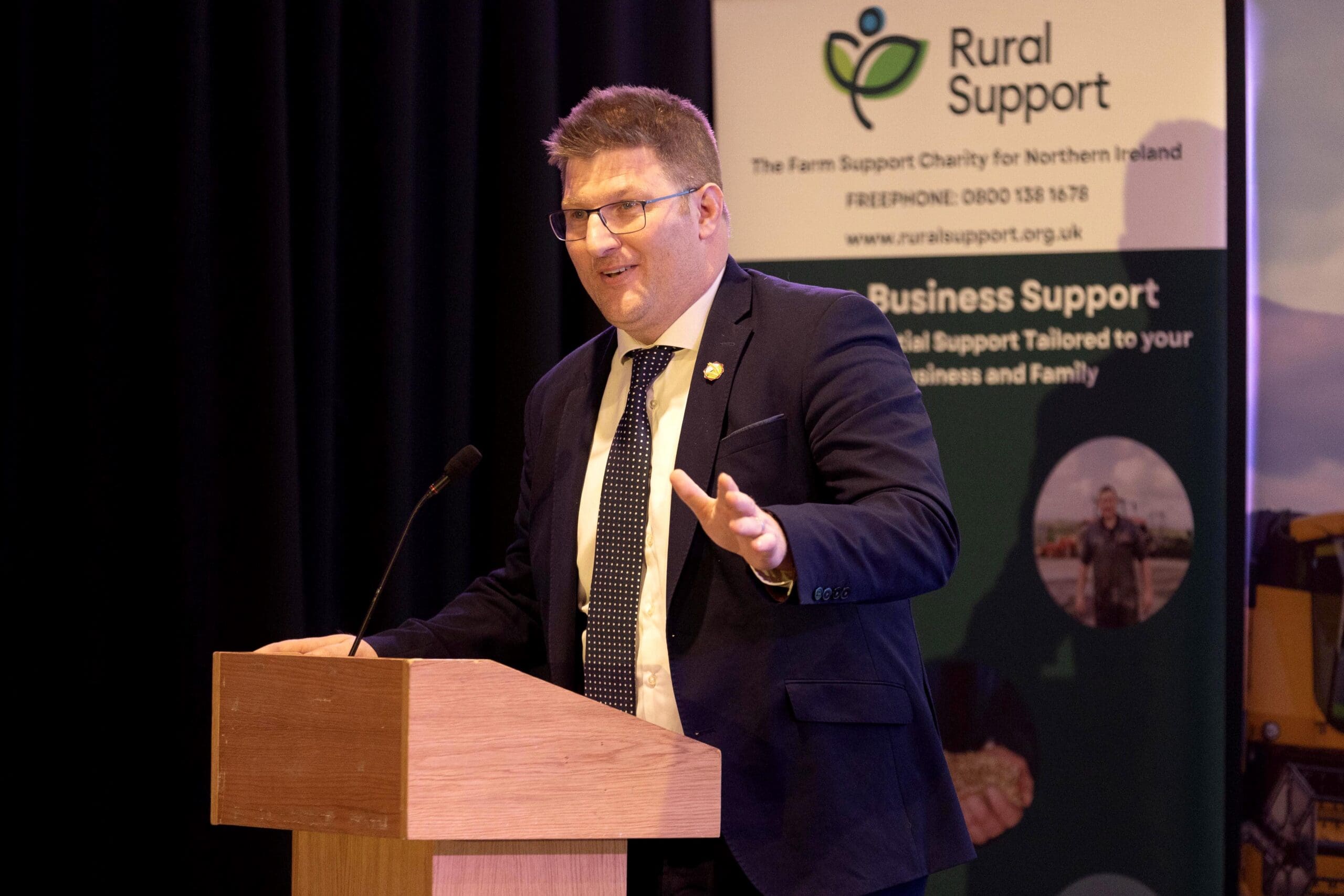
UFU president John McLenaghan said, “These findings are nothing short of devastating. We have warned repeatedly about the consequences of these inheritance tax changes, but we now have clear evidence from farming families themselves of the damage being done.
“Almost nine in ten reporting increased stress or worry should stop the Government in its tracks. These are not wealthy individuals sitting on disposable fortunes. These are hardworking farming families whose ‘wealth’ is tied up in the land, buildings and machinery they need to produce food. Families who have spent generations building their businesses are now facing the prospect of enormous tax liabilities, with many questioning whether their farms can survive the transition to the next generation.
“The Government talks about protecting UK food security while pursuing a policy that is undermining the very family businesses responsible for producing our food. That contradiction cannot be ignored, and there exists a renewed opportunity at the Autumn Budget to change course and restore their relationship with agriculture.”
The findings demonstrate that the consequences extend far beyond future tax bills, with inheritance tax changes already influencing day-to-day business decisions. The impact on investment is particularly concerning. More than two in five respondents have already reduced, postponed or cancelled farm investment, or are taking steps to do so, specifically in response to inheritance tax changes.
Mr McLenaghan continued, “This is not a problem waiting to happen when a farmer dies. The damage is happening right now. Money that should be going into farm buildings, environmental improvements, increasing efficiency, and the future of food production is instead being held back as families try to prepare for potential tax liabilities.
“Every investment that does not happen has consequences, not only for the farm but for the wider rural economy.
“Perhaps most worrying of all is what this means for the next generation. Almost half of respondents are telling us that their intended successor is now less willing or less financially able to take over the farm. We cannot afford to lose the next generation of food producers because of a tax policy that fails to recognise the realities of farming.”
The Ulster Farmers’ Union will present the report and its findings to parliamentarians in the coming days, bringing the experiences of Northern Ireland’s farming families directly to the heart of Government. The UFU will highlight the impact of inheritance tax changes on family farms, succession and investment, while seeking constructive engagement with MPs ahead of the Budget.
Mr McLenaghan concluded, “The Chancellor now has an opportunity to listen to the evidence and address the damage highlighted in this report. This is about far more than inheritance tax. It is about whether the next generation can afford to farm, whether family businesses can continue investing and whether the UK is serious about protecting domestic food security.
“We hope this Government will recognise the strength of this evidence and use the Budget as an opportunity to provide the certainty and confidence farming families desperately need. We want to work constructively with Ministers to secure a future where family farms can thrive, invest and pass viable businesses to the next generation.”
“Our message is simple: protect family farms, protect the next generation and protect the future of UK food production.”
Notes to editors
1.The full report, UFU Pre-Budget Membership Survey – Report of Findings, is available upon request by emailing kmcildowney@ufuhq.com
- The UFU Pre-Budget Membership Survey was conducted between 29 September and 12 October 2026.The survey examined financial confidence, investment, inheritance tax, succession and priorities for the Autumn Budget.
- Farmers and farming families experiencing stress, anxiety or financial pressures are reminded that confidential support is available through Rural Support, a Northern Ireland charity providing practical and emotional assistance to the farming community.
Rural Support’s free, confidential support service can be contacted on 0800 138 1678 or through its website at www.ruralsupport.org.uk.