
Commoditty Watch by Ellen Rankin
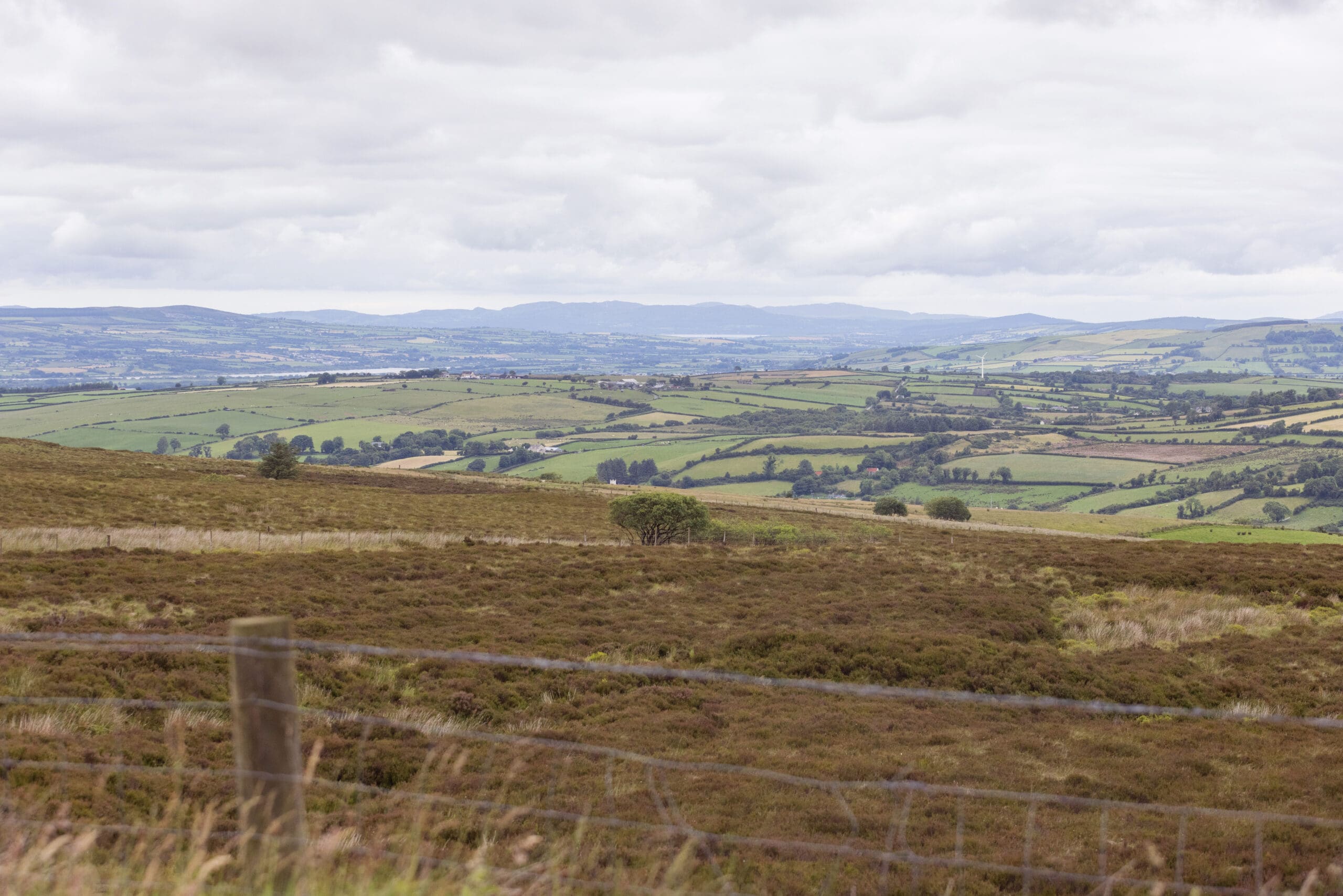
Hill farms are a crucial component of Northern Ireland’s agri-food sector. Often nestled in the Mournes, Sperrins and Antrim Hills, farms in these upland areas play a pivotal role in food production, wildfire management and offer an array of environmental services such as carbon storage, habitat protection and water quality preservation. The surrounding land possesses complex ecosystems, watercourse sources and intricate topography. Despite the strategic importance of hill farms, their land is often classified as a Less Favoured Area (LFA), a status which can be broken down into two categories – Severely Disadvantaged Area (SDA) and Disadvantaged Area (DA).
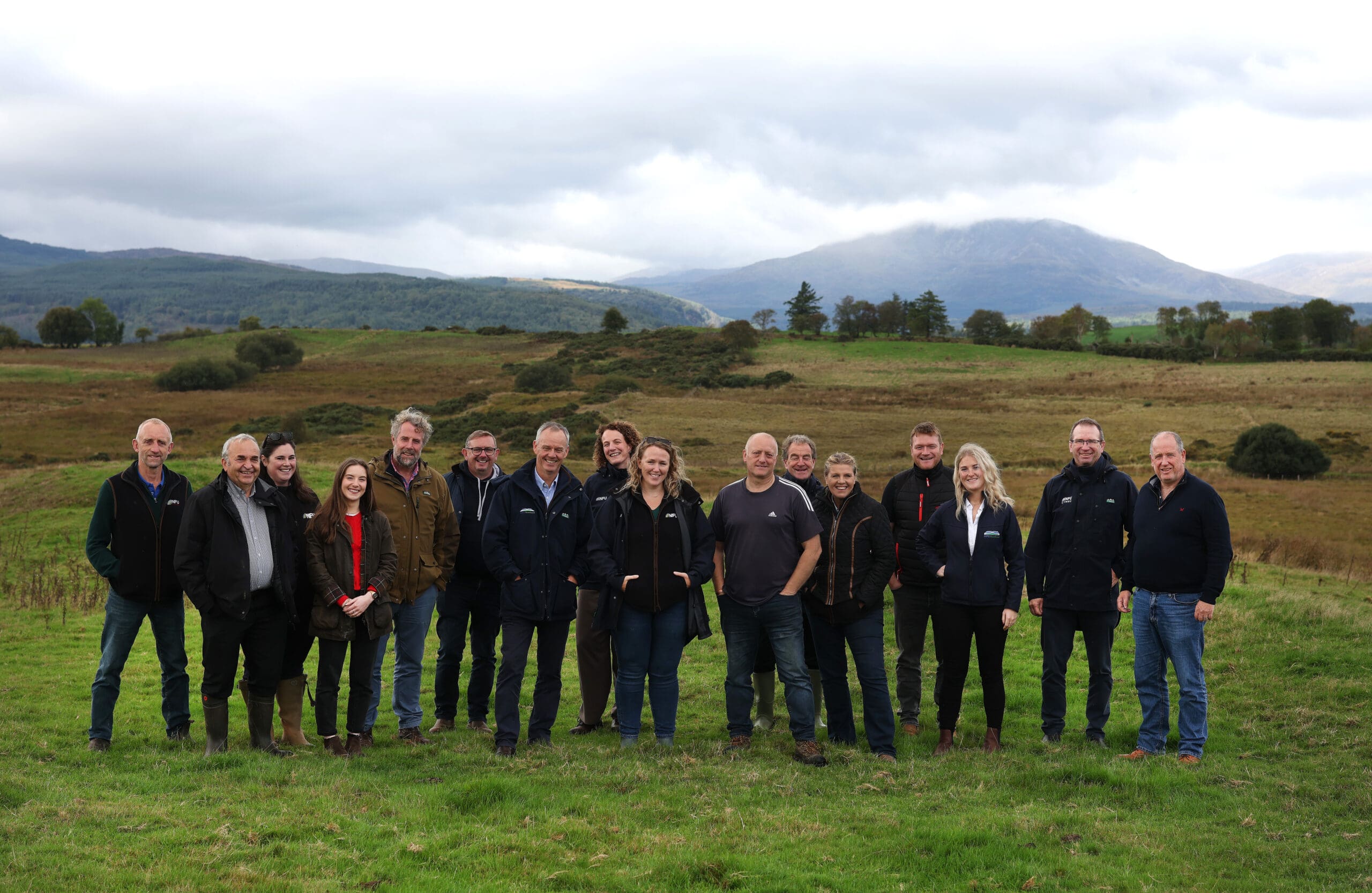
On 15-16th September, hill farms were in the spotlight during the inaugural UK Farming Unions Upland Summit in Betws-y-Coed, Wales. For the first time, hill farming representatives from the four UK nations came together to exchange policy developments and address disparities through roundtable discussions and visits to hill farms in the heart of Eryri National Park. The devolved nations each provided an update. The reduction of livestock in the hills was a shared concern and a common challenge. In Wales, representatives reported that sheep numbers are at their lowest since 2011 and that the number of beef cattle is falling by 6% annually. The need for livestock retention in the hills was particularly felt by Scottish representatives, who stated that after large expanses of the Cairngorms were left for rewilding, devastating wildfires ravaged through heather in July 2026 and destroyed 3,300 hectares of moorland. Among attendees, the fear is that if livestock numbers decrease, so too will profitability and ultimately, the number of hill farms will decline. To tackle this, Wales has introduced an additional Social Value payment as part of their Sustainable Farming Scheme. Farmers are paid £107 per hectare if they adopt more sustainable food production practices than those stipulated in existing regulations – a strategy to benefit the farmer, local community and as a result, wider society. This incentive is a positive step towards keeping the workforce in the hills and ensuring that farm businesses remain viable and lucrative for the next generation.
Looking inwardly, Northern Ireland currently has no dedicated payment scheme in place for areas with natural constraints. In many ways, 2026 has been regarded as a transition year between Environmental Farming Schemes (EFS) and Farming with Nature (FwN) schemes. Those on the hills have spent this buffer year waiting it out, hoping for change and support to be announced. Without direct support payments, Northern Ireland’s hill farms operate at an annual loss of £17,000. However, the reinstatement of one particular support scheme would change this narrative – Areas with Natural Constraints (ANC) payments. This Private Members’ Bill, endorsed by Sinn Féin’s Declan McAleer MLA, offers hill farms a financial lifeline with the proposal to reintroduce area payments on SDAs. This comes at a time when Northern Ireland’s agricultural sector is on a downward trajectory. From 2024 to 2025, the number of farms in Northern Ireland dropped from 26,190 to 25,834. Similarly, the number of beef cows fell from 226,000 to 213,744 in one year. The trend continues in sheep, with a 7% decrease in breeding ewes reported (
2024-2025). Critically, Northern Ireland’s SDAs account for 44% of priority habitats, 10,000 beef and sheep farms, 45% of suckler cows, 16% of dairy cows and 58% of breeding ewes. Hill farms are central to Northern Irish supply chains. As the bill undergoes scrutiny, the Ulster Farmers’ Union was called to give evidence before the AERA Committee in June 2026. UFU representatives, alongside the National Sheep Association, welcomed the reinstatement of the 2018 bill on the condition that payments are funded from ‘new money’ – not from current direct support through Farm Sustainability Payments. Under no circumstances should ANC funding reduce, delay, top-slice, displace or otherwise diminish any existing or planned support for active farmers. In recent years, hill farmers have been able to avail of the Beef Carbon Reduction and Suckler Cow Schemes. However, for the 1,038,945 sheep in SDAs, there is currently no support mechanism in place.
What is the way forward for NI’s hill farms? At the UKFUs Upland Summit, policy perspectives from Scotland resonated with attendees. Scottish representatives explained that farmers and crofters can avail of a Less Favoured Area Support Scheme (LFASS). This is an area payment set up to provide essential income to farms in remote and constrained areas. Eligible land also includes DAs – unlike the current ANC bill in Northern Ireland. Notably, the aim of the scheme is to prevent land abandonment and promote sustainable farming systems. Additionally, the Scottish Upland Sheep Support Scheme (SUSSS) acts as a top up on the LFASS payment. The scheme offers a payment on 1 ewe hogg per 4 hectares for farms which rely on rough grazing land. Farmers and crofters can also participate in the Scottish Suckler Beef Support Scheme (SSBSS), which offers a headage payment on calves born on-farm, who stay there at least 30 days and are a minimum of 75% beef-bred. Dams must be a first-time calver or have calved within a 410-day calving window. Could the Scottish model be a roadmap for Northern Ireland to follow?
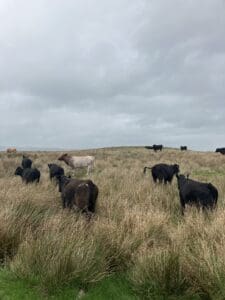
The strategic importance of hill farms cannot be overlooked. The reality is that Northern Ireland’s hills constitute a rich tapestry of farming and environmental systems. Policymakers and government decision-makers must recognise this by financially endorsing hill farms as those in these rural communities fight to sustain farm businesses and promote generational renewal.