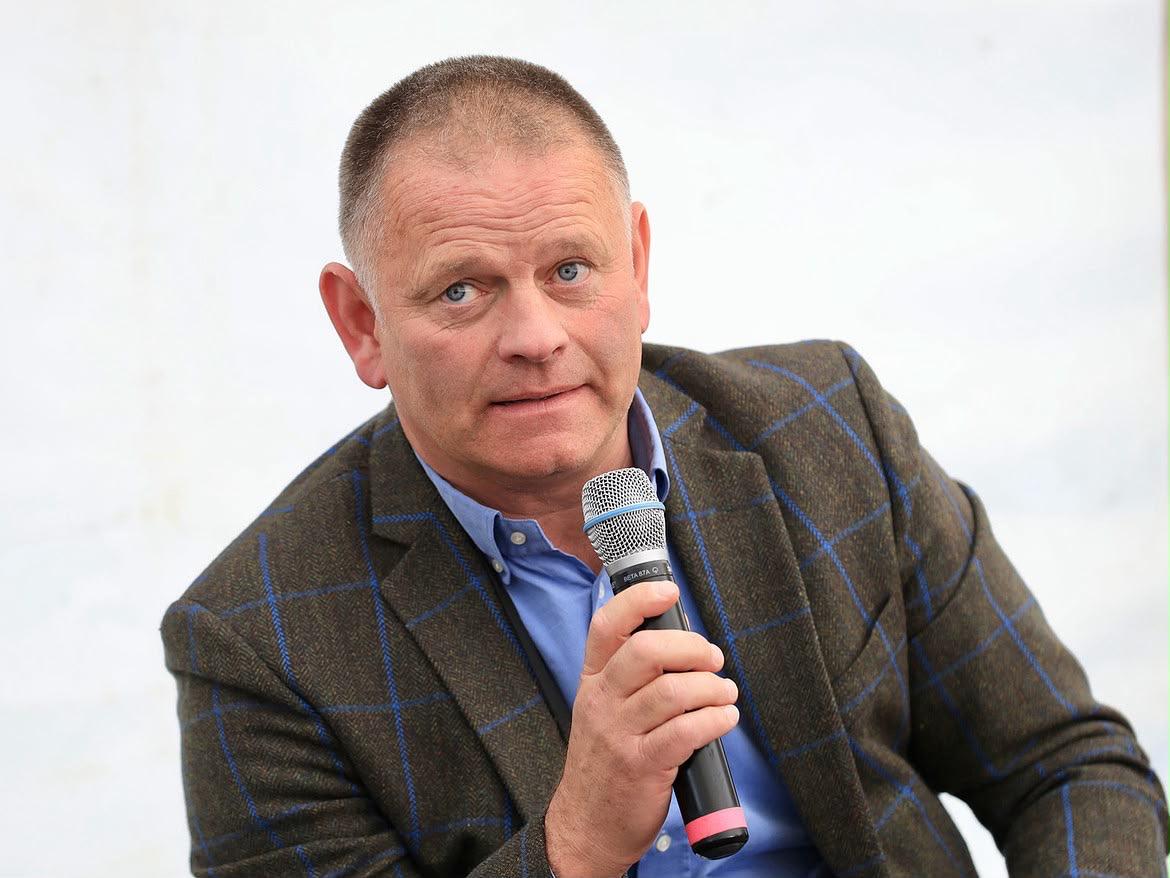

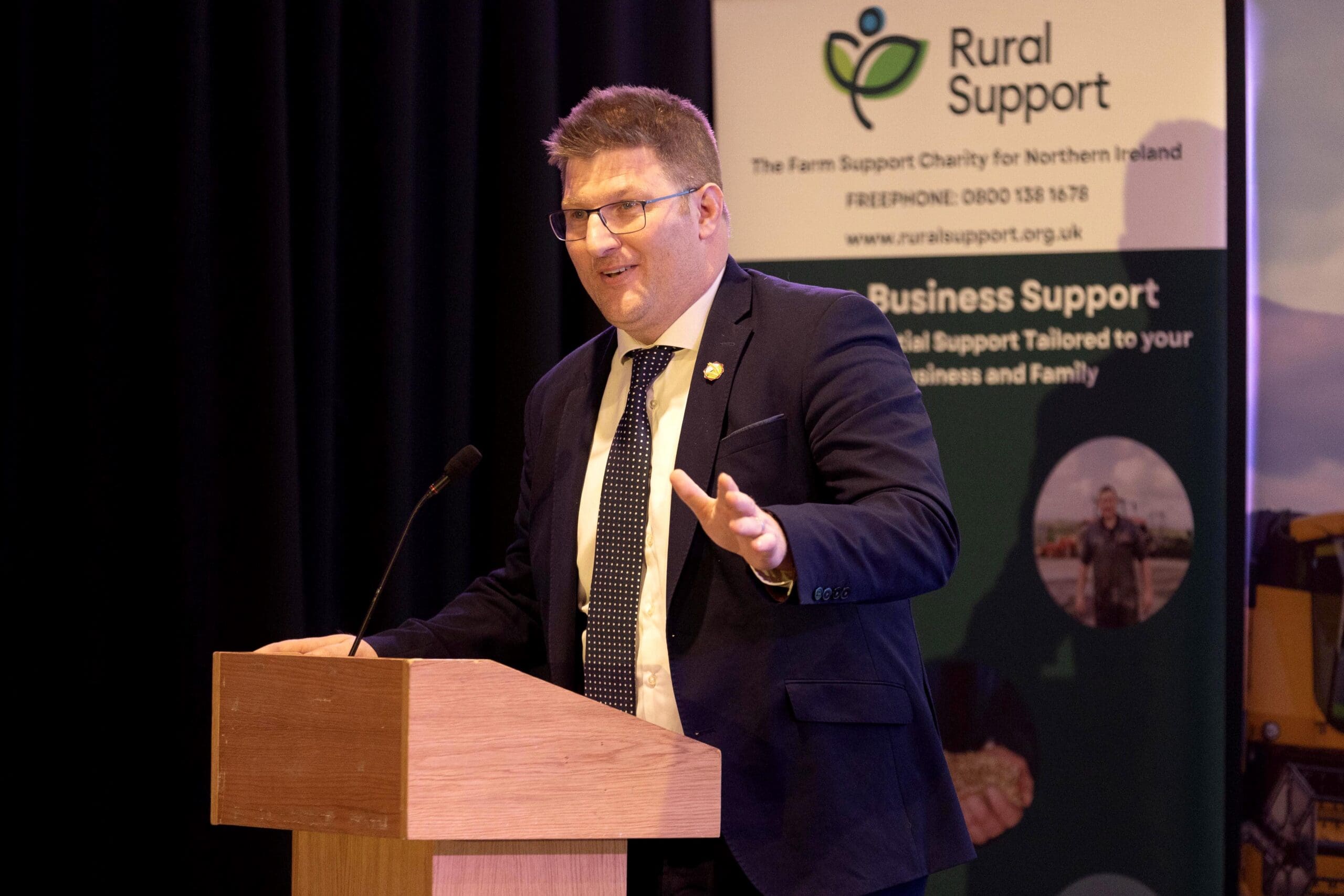
James McCluggage, UFU Policy & Communications Director, explains what happens when a UFU member raises an issue
By Policy and Communications Director James McCluggage
In the first article in this series, I looked at what policy actually is and why decisions affecting agriculture are rarely changed overnight.
But where does the process begin? Quite often, it starts with something very simple: a phone call, an email, a conversation at a UFU group meeting, or a farmer stopping one of us at an agricultural show or event and saying: “There is an issue here and something needs to be done about it.” That conversation matters. Our members are the people experiencing agricultural policy in practice every day. A proposal that might appear perfectly reasonable on paper can look very different when it reaches the farm gate. Equally, an issue that initially appears to affect one farmer can sometimes be the first indication of a much wider problem. That is why listening to members is fundamental to the work of the Ulster Farmers’ Union.
However, receiving a concern is only the beginning. The first task is to establish exactly what is happening. What are the facts? What rules or policies apply? What has already happened, and what is the practical impact on the farm business? That can involve speaking to the member in more detail, reviewing correspondence, examining government guidance or legislation and, where appropriate, engaging with officials or other organisations. We then have to ask another important question: is this an individual problem or evidence of something wider?
There will always be individual cases where something has gone wrong or where a member needs assistance navigating a particular process. Supporting members through those situations is an important part of the Union’s work. But sometimes one phone call is the first indication of something much more significant. If several farmers are experiencing the same difficulty, or if an individual case exposes a weakness in a policy, regulation or scheme, it can become an issue requiring action on behalf of the wider membership. This is where the UFU’s grassroots structure becomes particularly important.
The Union is not simply a policy team sitting in Belfast deciding what farmers should think. Our policy positions are informed and shaped by farmers through the Union’s network of local groups, committees and elected representatives. That process matters because farming is not uniform. What looks like a workable solution for one sector, farm type or part of Northern Ireland may create unintended consequences somewhere else. Even within the farming community there will not always be complete agreement about the best solution.
Our responsibility therefore cannot simply be to amplify the first, or indeed the loudest, opinion we hear. It is to listen carefully, understand the different views within our membership, examine the evidence and establish a position that we can credibly put forward on behalf of farmers. There is then another question which is every bit as important: what are we actually asking to be changed? Identifying a problem is only half the job. It is relatively easy to tell government that farmers are unhappy with something. It is much more powerful to explain precisely what is wrong, demonstrate the consequences and put forward a practical alternative, developed through the Union’s democratic structures and informed by the members we represent.
Once we understand the issue and the outcome we are seeking, the next question is how best to achieve it. There is no single route. Sometimes the most effective first step is a conversation with the government official responsible for implementing a scheme. In other circumstances, an issue may need to be raised with senior civil servants, a Minister, MLAs, MPs or an Assembly committee. We may respond formally to a consultation, use independent research and evidence, work alongside other industry organisations or bring farmers directly into meetings so that decision-makers hear first-hand how a proposal will affect their businesses. There are also occasions when public pressure and media engagement are necessary.
Importantly, however, not everything the UFU does will be visible publicly. It can be tempting to measure lobbying activity by the number of press releases issued, meetings photographed or social media posts published. These are useful tools, but they are only part of effective representation. Some of the most productive work happens quietly: identifying a potential problem before a proposal is finalised, challenging an assumption, presenting evidence, getting wording changed or persuading policymakers to consider another approach. If an issue can be resolved through a constructive conversation, there is little value in creating a public confrontation simply for the sake of being seen to do something.
Equally, there will be times when government does not agree with us. Effective representation does not mean winning every argument. We then have to consider whether further evidence could change the position, whether greater political engagement is needed, whether an acceptable compromise is possible or whether the issue requires a longer campaign.
That brings us back to something I highlighted in the first article: policy is often a marathon rather than a sprint. For the member who made the original phone call, much of this work may happen out of sight. Behind that call there can be discussions with other farmers, committee consideration, research, correspondence, political briefings and repeated engagement with officials. And sometimes it all started because one farmer lifted the phone and said: “You need to have a look at this.” That is why member engagement matters. The UFU cannot represent farming effectively unless we know what is happening on farms across Northern Ireland. The connection between the farm gate and the decision-maker is at the heart of effective representation.
Next in the series: How lobbying actually works. What happens once the UFU has agreed what needs to change? We will look at who we engage with, what happens behind the doors of government and why effective lobbying involves much more than simply asking a Minister for what we want.