
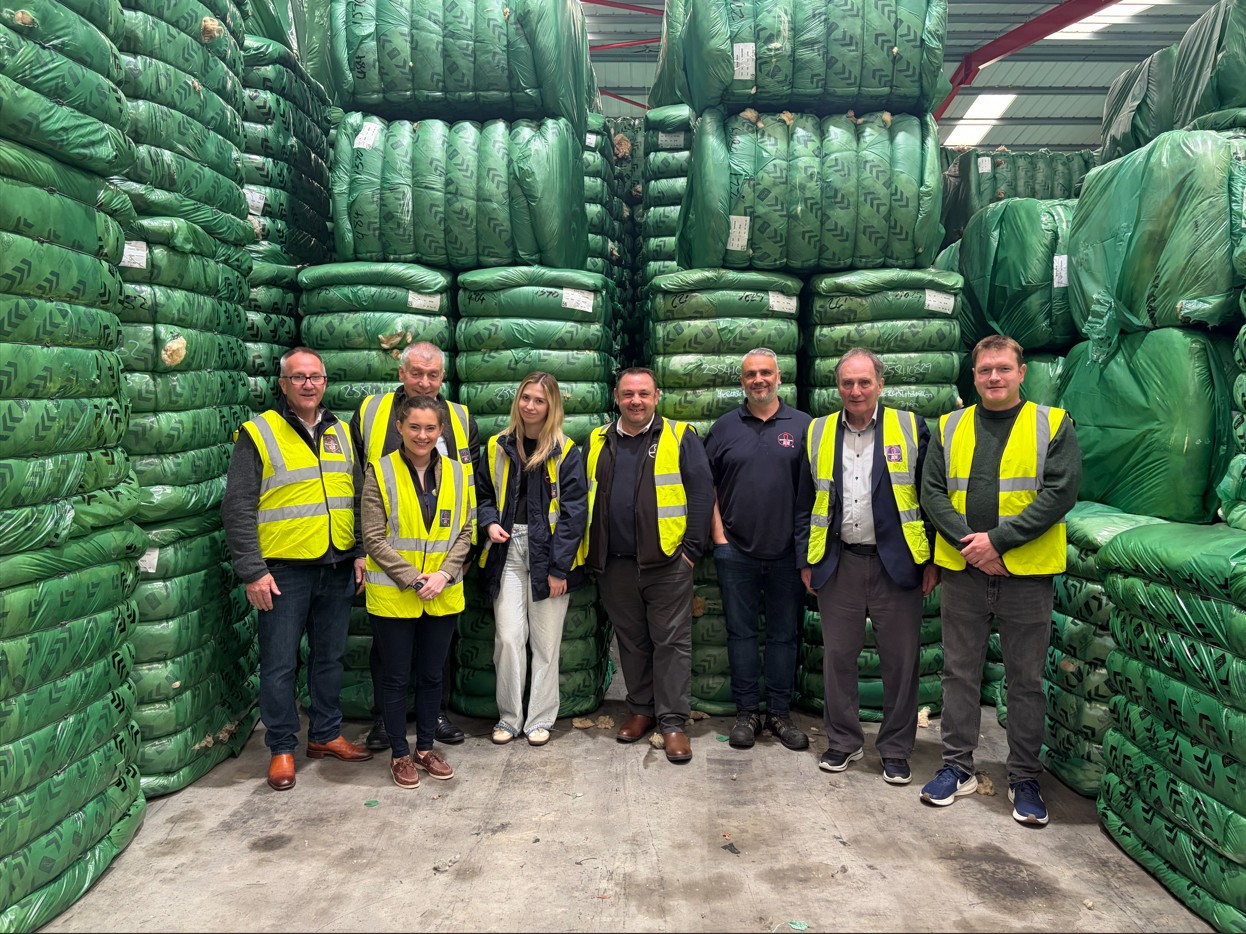
The Ulster Farmers’ Union has highlighted the growing value and sustainability of wool following a visit by its Beef and Lamb and Hill Farming chairs to the British Wool depot in Bradford last week.
The delegation observed the full process wool goes through after leaving the farm, from delivery and grading to auction and processing and the visit provided valuable insight into the importance of the wool sector and the opportunities currently available to sheep farmers.
UFU deputy president, Clement Lynch, said, “The visit allowed us to see first-hand what happens to wool once it leaves the farm gate. From grading and testing through to the online wool auction process, where lots of up to eight tonnes were sold in as little as 15 seconds. It was clear there is strong international demand for British and Ulster wool.
“The auction was extremely strong with buyers from all over the world competing to purchase British Wool, including multiple lots from Northern Ireland,” said Mr Lynch.
Prices for the 2025 wool clip are up around 70%, representing the strongest returns seen in the past decade, and there is optimism the 2026 outlook will follow a similar trend.
Mr Lynch encouraged farmers to carefully consider where they market their wool this summer.
“Farmers should be aware of the strong prices currently available through Ulster Wool,” he said.
“Unlike previous years where wool was often viewed as a low-value product worth only a few pence per kilogram, it is now covering the majority of shearing costs and in many cases leaving a modest surplus.”
He also warned against holding wool in storage for prolonged periods, citing that storing wool for several years only reduces quality and value while also creating additional storage costs.
Following the Bradford depot visit, the delegation travelled to the Haworth Scouring Plant where wool from across the world is processed depending on customer blend specifications.
British wool main supply chain use is 52% carpets, 23% knitwear, 14% cloth, 9% beds/bedding and 2% other products.
Mr Lynch said promoting natural fibres like wool has never been more important.
“While it is more expensive initially, wool is a natural, sustainable and environmentally friendly fibre compared to synthetic alternatives which can take hundreds of years to break down in landfill,” he said.
“As farmers and consumers, we need to lead by example and support the wool industry by choosing wool products wherever possible.”
Related Stories
Strategic importance of the UK’s uplands must be recognised, say UK farming unions
UFU Meets MEP to Discuss Concerns Over Brazilian Beef and Poultry Imports