

CALF registrations rose across Northern Ireland (NI) last year, the Livestock and Meat Commission (LMC) has reported. Data provided by the Northern Ireland Food Animal Information System (NIFAIS) concludes that a total of 527,244 calves were registered in NI during 2025, an increase of 5,072 head compared with 2024. This marks a modest recovery following two consecutive years of declining registrations.
Beef-sired calves accounted for 72.7% (383,318 calves) of all registrations in 2025, with numbers increasing by 12,475 head (3.4%) since 2024. In contrast, dairy-sired calf registrations recorded a decrease of 7,341 head (4.9%) from 2024.
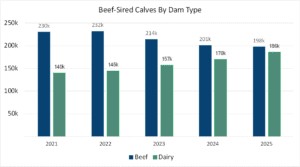
Commenting on beef calf registrations, LMC Agricultural Market Analyst, Sam Coalter stated, “The composition of beef calf registrations has continued to change in recent years, with an increasing proportion of dairy-bred beef calves. In 2025, suckler calves accounted for half (51.5%) of all beef calf registrations, decreasing from two-thirds (62.2%) in 2021.” In real terms the gap between suckler and dairy-bred beef calf registrations has narrowed considerably over the last 5 years. In 2021, over 90,000 more suckler calves were registered than dairy-bred beef calves. By 2025, this difference had reduced to just over 11,000 head. Suckler calf registrations fell below 200,000 head in 2025 having decreased by 1.7% from 2024. While continuing to decrease, the rate of decline has slowed from that seen over the previous two years (-7.6% in 2022-23 and -6.3% in 2023-24).
Within the suckler herd, Limousin and Charolais continue to account for the majority of registrations. Together, these two continental breeds represented nearly two-thirds of suckler calf registrations in 2025 (64.0%).
Among dairy herds using beef sires, Aberdeen Angus accounted for half (50.5%) of progeny registrations. Belgian Blue represented 17.9%, followed by Hereford at 9.6%. Registrations of Limousin-sired calves within dairy herds have declined in recent years, consistent with an increased use of native breeds. This aligns with abattoir bonus structures and the practical advantages associated with calving ease.
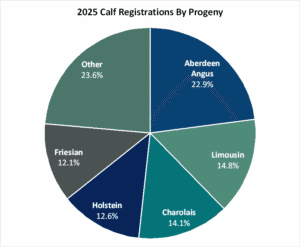
Commenting on the breakdown by breed, Sam said, “Overall, Aberdeen Angus-sired calves made up 31.5% of all beef calf registrations in NI during 2025, maintaining their position as the most recorded beef breed. Furthermore, almost one quarter beef calves registered during the year were dairy-bred Aberdeen Angus (22.9%).”
The continued uptake of sexed semen within the dairy sector has also influenced calf registration patterns. In 2025, dairy bull calves accounted for one-fifth (20.7%) of dairy-sired registrations, compared with one-third (32.4%) in 2021. The reduction in dairy bull calf numbers has been accompanied by a higher proportion of beef-sired calves from dairy herds.
Looking to 2026, Sam commented, “Recent trends suggest that dairy-bred calves are likely to continue to make up a growing share of beef calf registrations. The use of sexed semen in dairy herds supports this trend, although, assuming the dairy breeding population remains stable, the number of beef calves produced by the dairy herd is likely to reach a ceiling due to the need to maintain dairy replacement stock. Meanwhile, higher beef prices may encourage some suckler farmers to retain more heifers for breeding, which could lead to an increase in future suckler calf registrations.”
Related Stories
Strategic importance of the UK’s uplands must be recognised, say UK farming unions
UFU Meets MEP to Discuss Concerns Over Brazilian Beef and Poultry Imports