
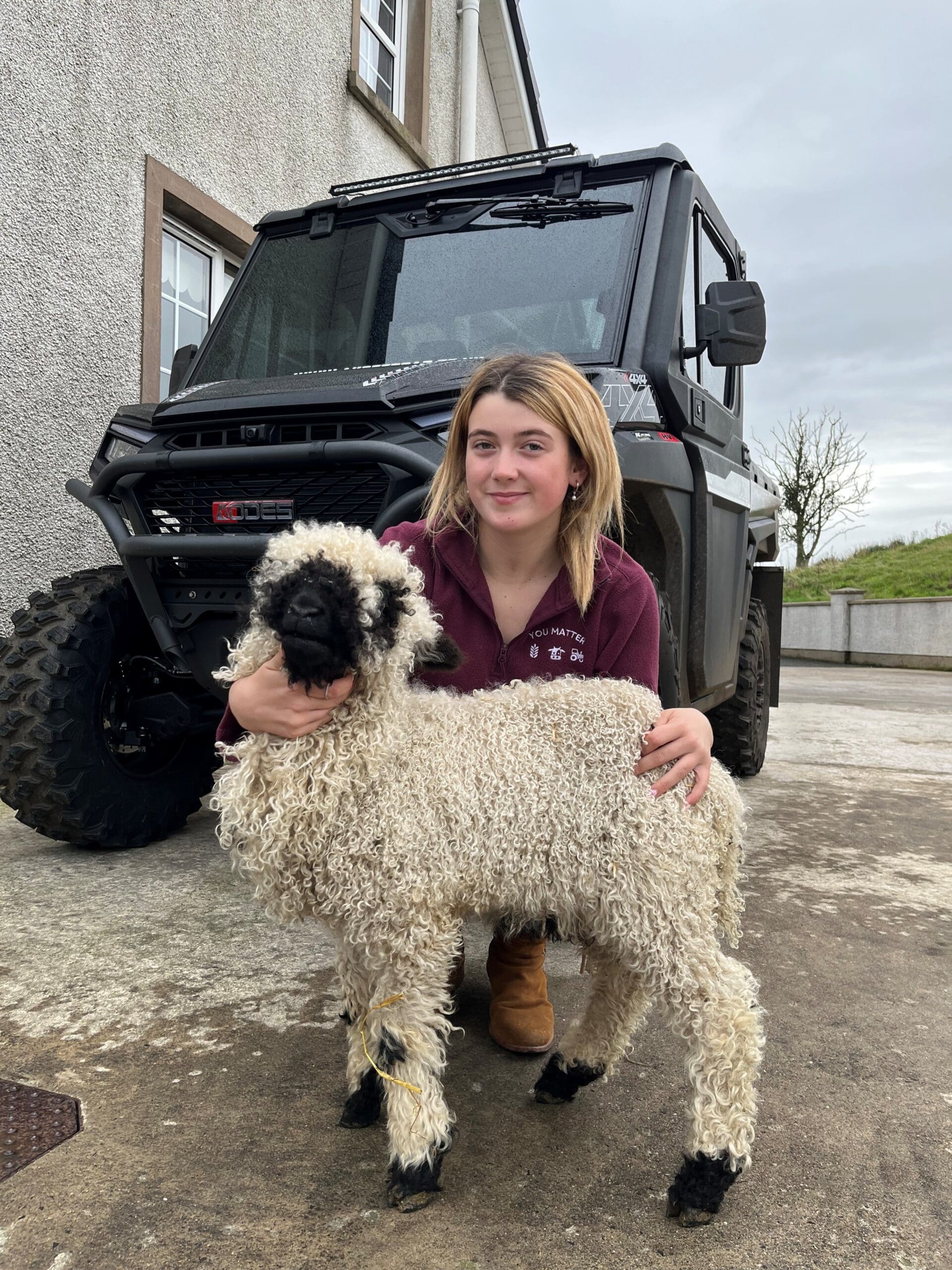
Place you call home: Mosside, Co. Antrim.
Occupation: I am a dairy and sheep farmer, and I am currently studying A-level agriculture.
Farming commodity: I work alongside my parents on our dairy farm, milking cows in a Dairy Master parlour and I keep a small flock of my own sheep, including a variety of breeds such as Suffolk and Dorset ewes. Recently, I purchased my first Valais Blacknose lamb, which has been an exciting addition to the flock. I am also highly involved in photography and own a drone, which I use to capture photos and videos of farmers and contractors carrying out a wide range of agricultural work.
How did you become involved in farming?
I have been involved in farming for as long as I can remember. My mum came from a contracting family (Lyons contracts), while my dad has always been involved in farming. He built the farm from scratch, and both my mum and dad kept a considerable number of sheep before my dad began milking dairy cows in 2014.
From the age of four, I was always out with the cows, eager to learn and keen to get involved in milking. My dad played a huge role in encouraging and influencing me. He gave me every opportunity to get stuck in, allowing me to take on tasks he felt I was capable of and helping me develop my skills and confidence from a young age. The support, trust, and opportunities he provided have shaped who I am today and have helped me become the person and farmer I am now.
Earliest farming memory: One of my earliest farming memories is from when I was very young, dressed in my Massey Ferguson boiler suit, a fluffy pink hat, and pink glittery wellies. I was always eager to help milk the cows, but I was still too small to reach. To solve this, I had my own little milk crate to stand on so I could pretend to milk alongside everyone else. More often than not, I was probably getting in the way, but I was determined to be involved and learn from an early age.
What personal characteristics did you develop from agriculture?
One personal characteristic that I have developed through agriculture is a strong work ethic. From an early age, I have been getting up before school to help with the milking and returning home afterwards to milk again, while also caring for my sheep. These experiences have taught me the importance of commitment, time management, and hard work.
Another characteristic I have gained from working in agriculture is resilience. Farming often presents challenges that are beyond our control, such as poor weather conditions affecting silage work or sudden changes in market prices. These challenges have built me up to be a tough and adaptable character.
Life lesson you learnt from farming:
One of the most important lessons I have learned from farming is that if you want to achieve something in life, you must be willing to work hard for it. Whether it is something for the farm or a personal goal, success does not simply get handed to you.
My dad has had a significant influence on me in this respect. He has always encouraged me to work for what I want and has shown me through his own example that success comes from determination and effort.
What do you enjoy most about the farming lifestyle?
Every season is completely different, and you get to witness the changing seasons first-hand. From shifts in the weather to the busy silage season and the arrival of newborn animals such as lambs. I also enjoy the opportunities that farming provides outside of the farm gate. Being involved in Young Farmers allows me to take part in a variety of competitions, develop new skills and meet new people who share similar interests.
Describe a farmer in three words: Farmers are most definitely and no doubt about it hardworking, independent and patient.
What would you like the public to know about NI farming?
Farming is not just a job; it is something that some people only know and can be such a massive part of some people’s lives; people have such a love and passion for it. It is not just someone providing food for people, it is a way of life. So much hard work and effort as well as long hours goes in behind the scenes of being a farmer which sometimes members of the public do not realise. It can be so tiring and stressful but farmers still long to work through it, even when they feel that way to ensure that they provide the best they can for the community.
If you could give farmers/farming families/ farming community one piece of advice, what would it be?
Don’t get caught up with the workload and stress behind working on the farm. It is important to make time for the people who matter most to you and to take opportunities to step away from the pressures of work when needed.
Never underestimate the importance of taking a break and looking after your own wellbeing. Farming can sometimes feel overwhelming, stressful, and even isolating, but during those difficult times, it is important to remember why you do it, who you are doing it for and the passion that first drew you to agriculture.
What would you say to others who are considering a career in the agri industry?
I would encourage anyone considering a career in agriculture to go for it. It could be one of the best decisions you ever make. While it can be a challenging career at times, the more effort and dedication you put in, the more skills, experience, and opportunities you will gain in return. There are so many different career paths within the agricultural industry, each offering unique opportunities and valuable life skills. Take the time to research the different roles available and find an area that interests you. You never know where a career in agriculture could take you.
What are your hopes for the future of Northern Ireland’s agriculture industry?
I hope that for the future of agriculture in Northern Ireland, more women will feel included within the industry, and that even more opportunities will be available for women pursuing careers in the agricultural sector.
Another hope I have for the future of the industry is that people feel comfortable reaching out for support when they are facing challenges and struggles. There is a wide range of support and assistance available, and no one should feel embarrassed or ashamed to ask for help. Talking about struggles and seeking support is a sign of strength, not weakness.