
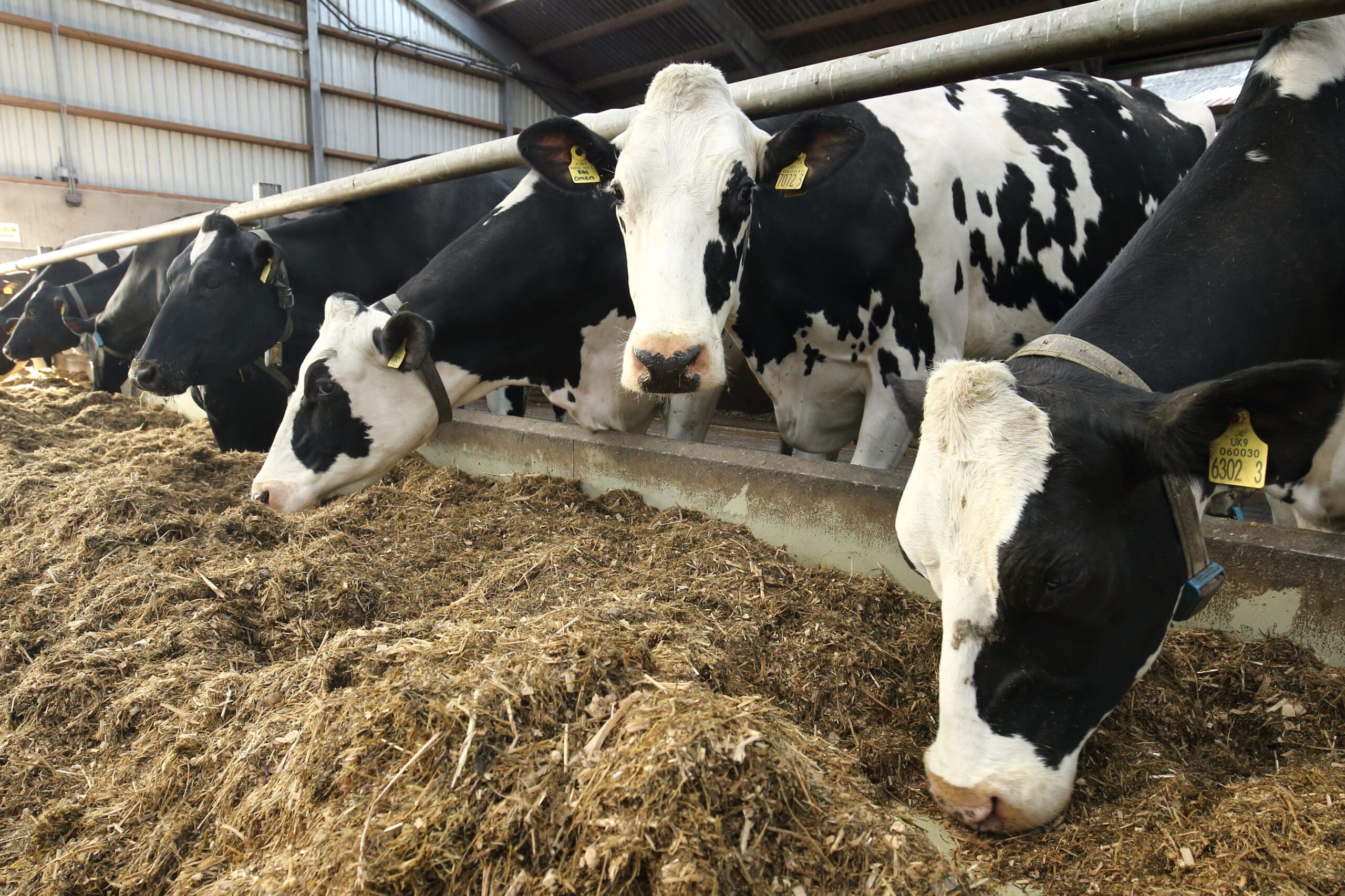
Wed 12 Feb 2020 – Dairy cattle at Greenmount. Picture: Cliff Donaldson
By UFU policy officer, Andrew Robinson
As 2026 begins, the dairy sector faces significant challenges. The ‘oversupply’ of milk, both globally and domestically, is often cited as a key factor behind falling farm gate prices. But why, when the UK is not self-sufficient in milk production, are we so exposed to the volatility of global markets?
Currently, there are approximately 10,800 dairy farmers across the UK, managing 1.86 million dairy cows and producing nearly 15 billion litres of milk annually. Northern Ireland accounts for about 15% of the UK’s milk supply, with 2,800 dairy farmers, 330,000 milking cows, and an annual production of around 2.6 billion litres of milk. In December 2025, Northern Ireland produced 240 million litres of milk, a 6% increase compared to December 2024. Across the UK, December 2025 saw an additional sixty million litres of milk produced, reflecting a 5.1% increase from December 2024. This growth has been attributed to by a number of factors, including an increased push from processors for more milk.
The base price paid for December milk averaged 27.54ppl, while the base price paid for December 2024 milk averaged 41.39ppl, a decrease of 13.85 ppl, representing a 33.5% drop. When compared to the 1995 October milk price of 28.53ppl, farmers in December received approximately a penny less per litre when looking at base prices. In examining pricing across the UK and the percentage change in processor prices from September to February, four of the twenty five processors were based in Northern Ireland, and these four were the four processors that made the most significant downward adjustments to their pricing.
Looking at the market, 2026 began with a surprise. The latest Global Dairy Trade event marked the third consecutive rise, which has helped soften the bleak outlook. However, the reality is that it only brings farm gate prices to the current threshold of 30 ppl. There’s still a long way to go before we see any significant price increases for farmers. Ultimately, it will be the tightening of milk supplies both domestically and globally that will help to drive the fastest recovery.
There are around 265 million milk cows globally, but if all were as efficient as those in the UK dairy herd, just 83 million would be needed to produce the same volume of milk. With a growing emphasis on sustainability in agriculture, driven by various factors within the industry, it is often overlooked that true sustainability begins with the farm business being financially sustainable. Something that is becoming increasingly difficult due to the volatility of global markets, where price fluctuations are more frequent and prolonged, particularly during downturns. Northern Ireland’s dairy farmers have made impressive strides in boosting sustainability across the entire industry, from cow genetics through to emission reductions.
While the UK dairy sector faces significant challenges, particularly with price volatility and global market exposure, the path to recovery lies in tightening supply and continued industry innovation. To ensure long-term viability, the industry must focus on stabilising financial sustainability alongside its growth objectives. Without this balance, the short-term outlook for dairy farming remains uncertain, but the resilience and adaptability of farmers will continue to play a crucial role in shaping the sector and its recovery.