
“I would challenge everyone this Mind Your Head week to take just 30 seconds out of your day and make an effort to ring that neighbour, ring that family member or friend that you maybe haven’t spoken to in a while; because that call could make such a huge impact on that person.”
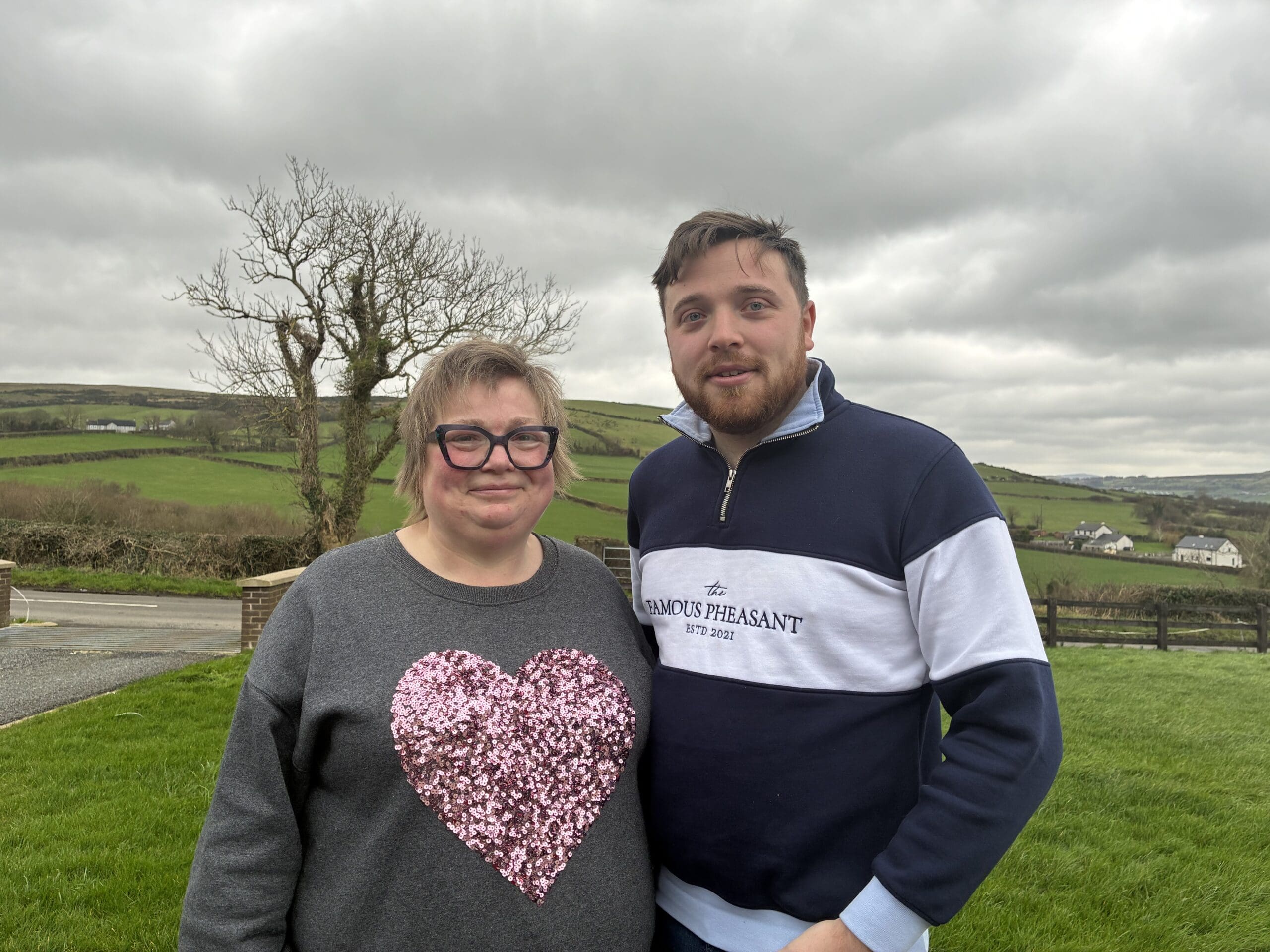
Those are the words of Philip Dunlop, who, along with his mum Jennifer, spoke with the Ulster Farmers’ Union in mark of the 9th annual Mind Your Head Week, an annual campaign led and funded by the Farm Safety Foundation (Yellow Wellies) which aims to dispel myths and tackle the stigma attached to poor mental health and suicide in the farming industry.
“If sharing our story as a family helps just one person, that would mean an awful lot,” Jennifer said.
From their dairy farm just outside the village of Glenarm, Jennifer, her husband Thomas, and their sons Andrew and Philip run both a working farm and an agricultural business. Andrew works full time alongside his parents, while Philip, though pursuing his own career, returns to help whenever he can.
In 2016, Thomas suffered what Jennifer described as a “very bad mental breakdown.”
“We didn’t see it coming at all,” said Jennifer.
“I know it sounds cliché when people say, ‘He’s not just my husband, he’s my best friend’, but that’s exactly how it is for us. We finish each other’s sentences.
“So, I suppose, for me, the hardest part was that I didn’t see it coming.”
Jennifer’s son Philip had some medical training and a basic understanding of mental health awareness and believed he would recognise the warning signs, but that was not the case.
“I had some training in looking out for signs and symptoms and I still had no sight of it coming. It just came out of nowhere. Overnight. Suddenly, bang, it was at our door. And you never think it’s going to happen. Then suddenly you’re in the middle of a crisis.”
Thomas became unable to cope with being at home. On some days, Jennifer had to take him away to their caravan to give him space. Once, after attempting to return home, they lasted only an hour before she had to drive him back again.
For Philip, the change in his dad’s passion for farming was stark.
“Dad had no interest in the farm anymore,” he recalled. “And that’s all dad has done from day dot, farm, farm, farm.”
“That was the biggest scare factor for me,” he said.
PRESSURE
Jennifer highlighted the pressures of carrying on with farm duties amidst the crisis.
“Farming is a 24-hour, 365-day commitment,” she said.
“For us to try to look after Thomas and support him, while also keeping the farm and the agricultural business going was tough. I have to say Andrew and Philip really took that on their shoulders, because I just couldn’t be out on the farm while looking after Thomas as well.
“You’re trying to hold somebody else together while running a business. That’s when you have to check in on each other and make sure everyone is okay.”
SUPPORT
At the time, support services were perhaps not as visible or accessible as they are today. But Jennifer noted the rural community who rallied around her family in their time of need.
“There’s a lot more help out there now, like Rural Support. When we needed help, it just wasn’t so readily available. We had to go and find it.
“But we had the rural community, especially farmers supporting us,” added Jennifer. “Whenever we realize that something’s not right with somebody, we are in the habit of rallying around each other.”
TB
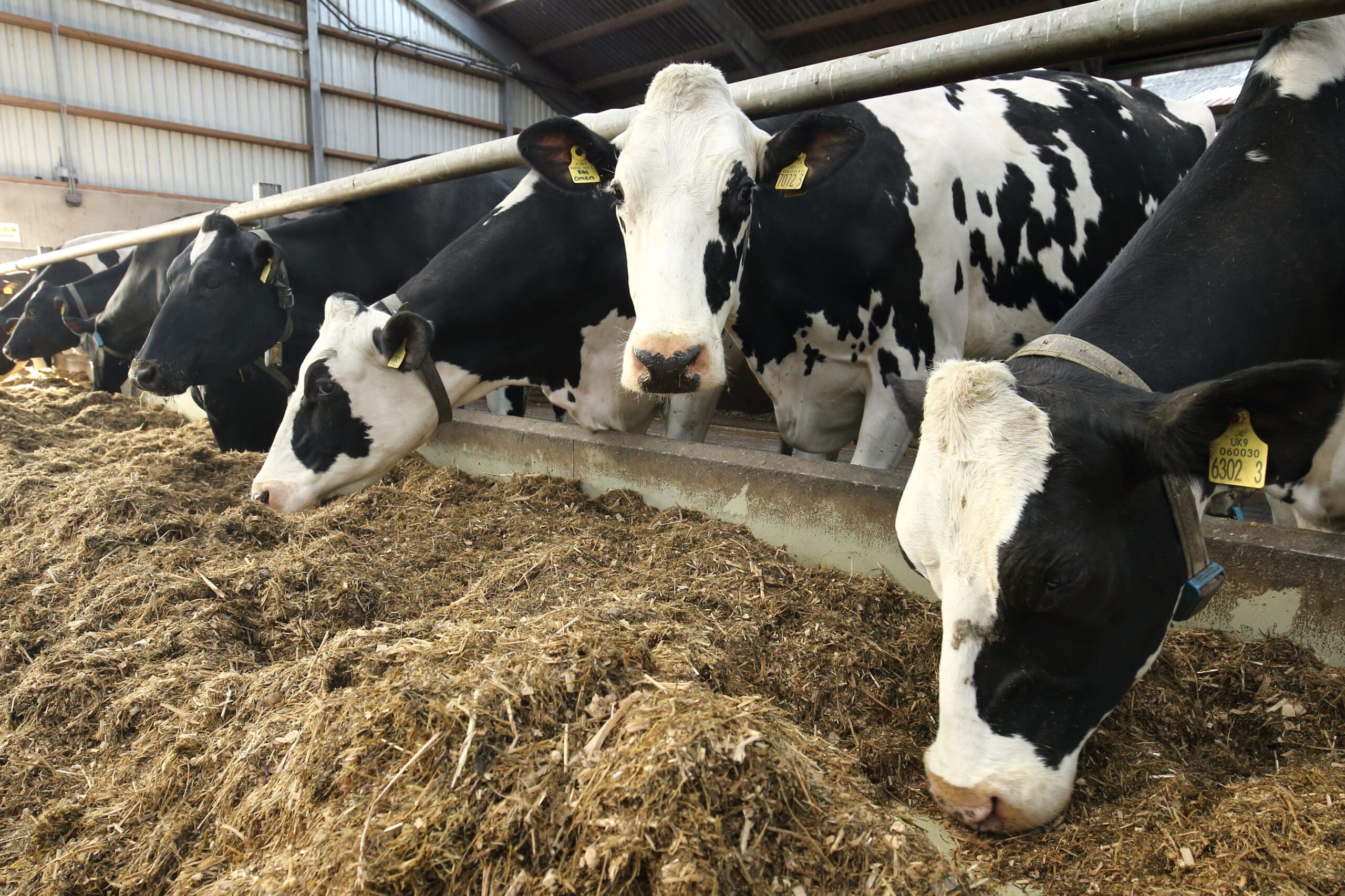
Beyond personal struggles, farming brings its own unique mental pressures, particularly around bovine TB testing.
“There are certain times of year that can be triggers for dad,” Philip explained. “TB testing is probably the main one for every farmer.
“If a farmer loses half his herd, we talk about the business impact. But we don’t talk about the pressure or the emotional connection.”
Jennifer admitted the annual TB test weighs heavily on her every year.
“You’re very conscious before the test. You’re thinking, ‘If we go down here, where are all these calves going? What are we going to feed them on?’ And that’s before you even get into the emotional side of it.”
For her, caring about the animals is inseparable from the job.
“You cannot have animals and not care for them. They are our livelihood. They put bread and butter on our table. If we look after them, they’ll look after us.”
Breaking the Stigma
Now, a decade on, the family feel able to speak openly, something Jennifer once believed would be impossible.
“If you’d said to me 10 years ago that I’d be talking about this, I’d have said absolutely no way,” she said. “There’s stigma. There’s embarrassment.”
But that silence is exactly what she hopes to challenge.
“There is always somebody who will listen. You’re never alone. There’s not a problem that can’t be fixed, no matter how bad it looks,” stressed Jennifer.
“Sometimes the mountain is just that wee bit harder to climb. And if you have somebody beside you, giving you that push up the hill, that bit of assistance, it can make all the difference.”
If you’re struggling, reach out today, help is available. Contact Rural Support on 0800 138 1678 or Samaritans on 116 123.