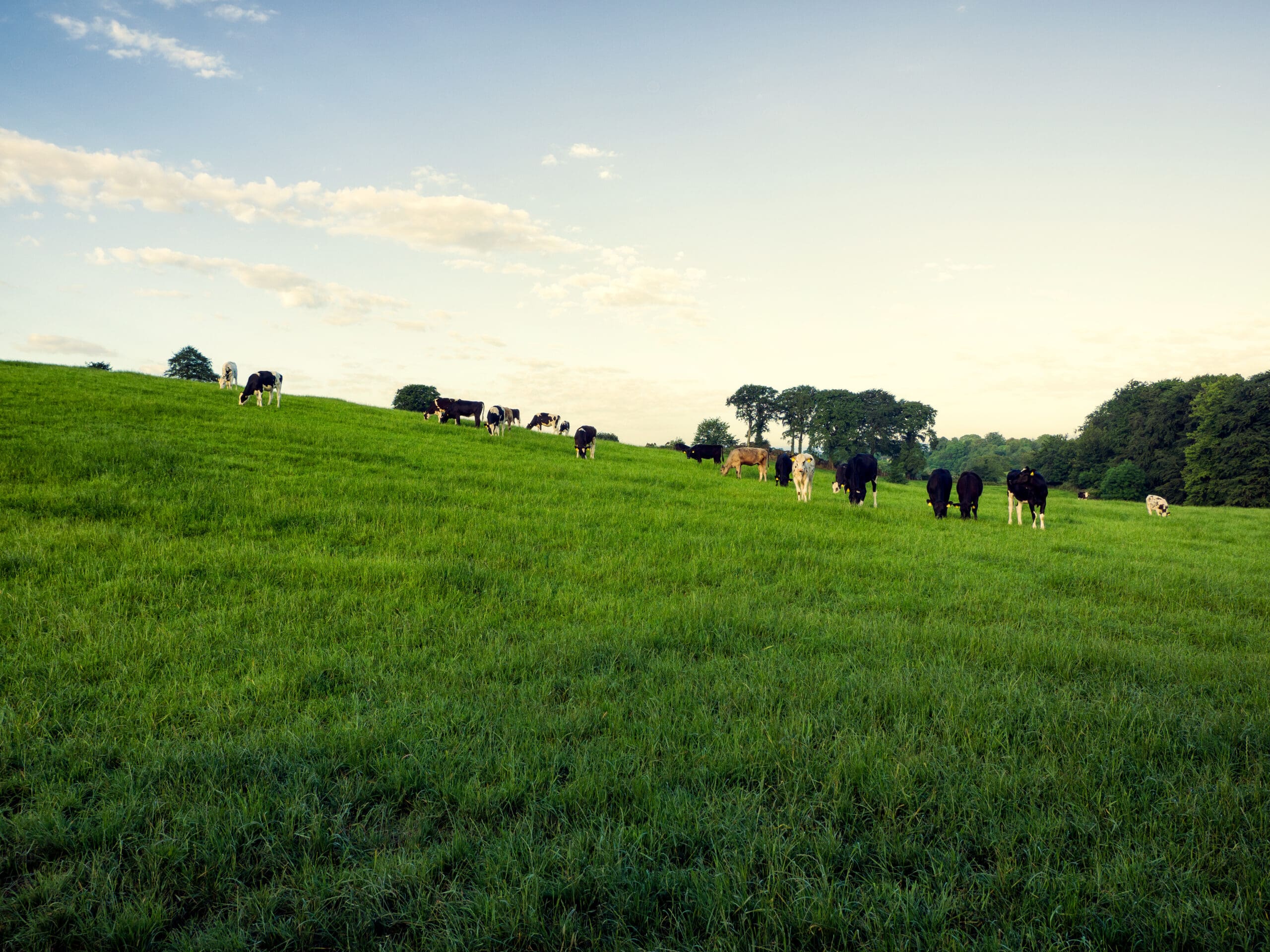


Dairy cows on William Irvine’s farm. Picture: Cliff Donaldson
Commodity watch by UFU policy, technical and communications manager James McCluggage
After a Global Dairy Trade holiday of three weeks, there has been a small gain of 0.5% in the GDT on top of the last auction which was 0.4%. This does not sound like much of an increase, however historically, July and August have usually been slow months for GDT auctions. The fact that there is a small, positive increase should provide a stimulus with New Zealand coming into its new milk season.
Average Euro butter price has soared by an average of €180, just short of €7,000 per tonnes, and in the United Kingdom this is just over £7,000 per tonnes. Furthermore, cream is £2.75 per kilo and skimmed milk prices have remained static with a lack of market stimulation.
In the futures market, European Union butter has increased another €100 per tonnes this week, and over the next six months on an average €7,200 topping at €7,400 for November spot traders. Such prices have not been since late 2022. Over the last month, butter is up over 640 per tonnes across the EU and €420 over two weeks. These are all really strong signals. However, New Zealand butter has dipped to €5,480 so it is a lot further behind EU prices. There is a risk that this could drag down Northern Hemisphere prices.
Cheese remains stable at this time of year with no real massive increases. Spot milk price in mainland GB is at the low 40 ppl.
When looking at the Republic of Ireland dairy industry, the latest volume figures published show a reduction of 1.3%, with the cumulative figures for the year down 5.4%. The UK volumes are down 4% over the past six months. In ROI they are feeling the real effects of bad weather and bad prices at the end of 2023 and the start of 2024 cumulated with high input prices, and it is widely reported that dairy farmer morale is low. It can be said that bad weather and bad prices will come and go, but policy incoherence threw into the mix along with new environmental regulations and nitrates derogation, certainly limits the ROI dairy industry and does not portray a rosy picture in terms of milk production.
So what does this mean at a local Northern Ireland dairy industry level? Cashflow continues to be a major issue on many dairy farms due to ongoing high costs. So, we need processors to continue to step up and play their part to help alleviate some of those pressures at farm level.
As mentioned above, there is clearly capacity for milk price to significantly increase; dairy co-op board members meeting to set their July milk price need to follow the lead set by Lakeland Dairies and deliver a strong increase to their base milk price in line with market returns.
Dairy farmers have put down a horrendous 12 months which has left a massive toll on cashflow. The coming months offer dairy farmers a chance to improve their balance sheet, but they can only do this if their processors step up with a strong milk price and the market signals are there to deliver it.