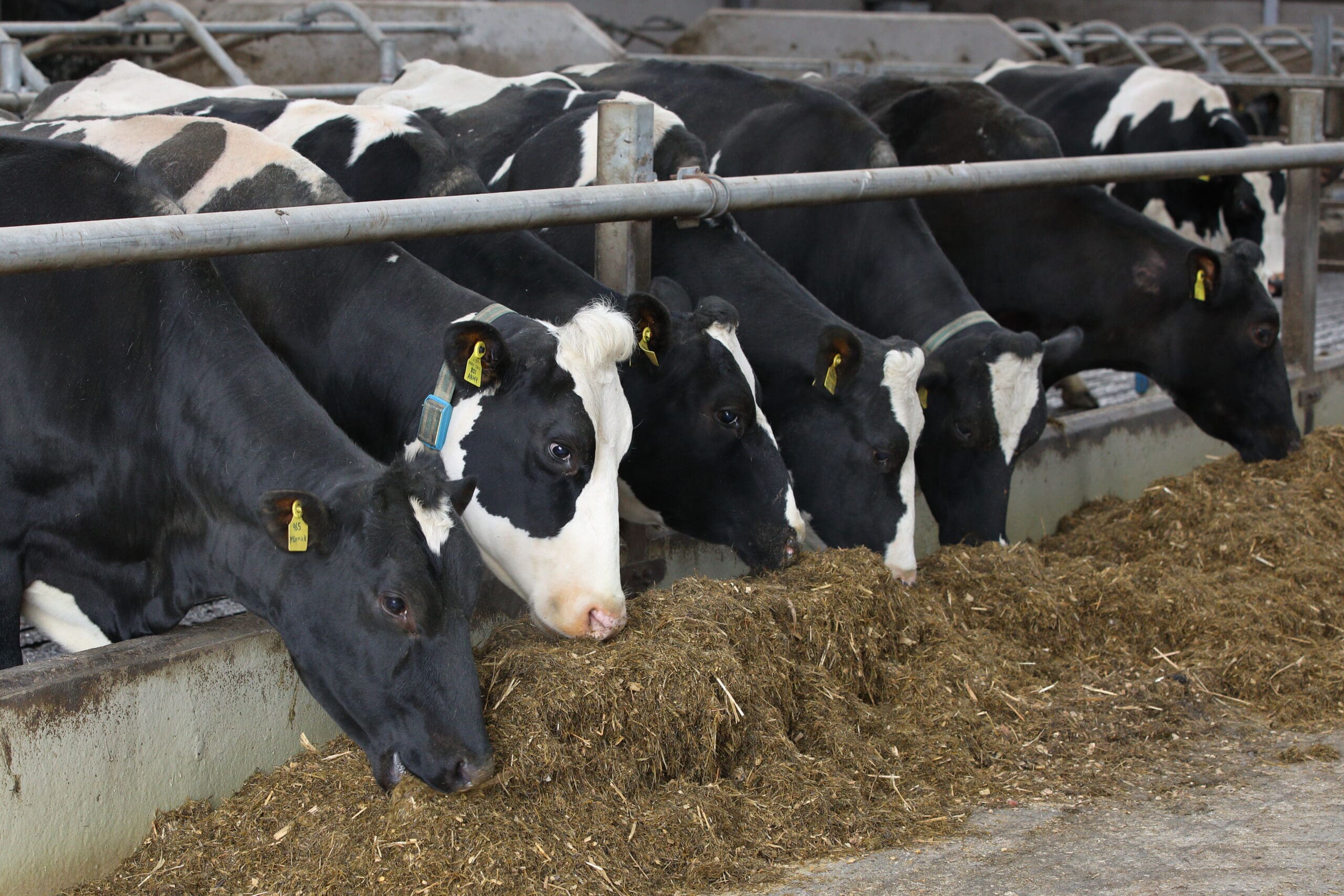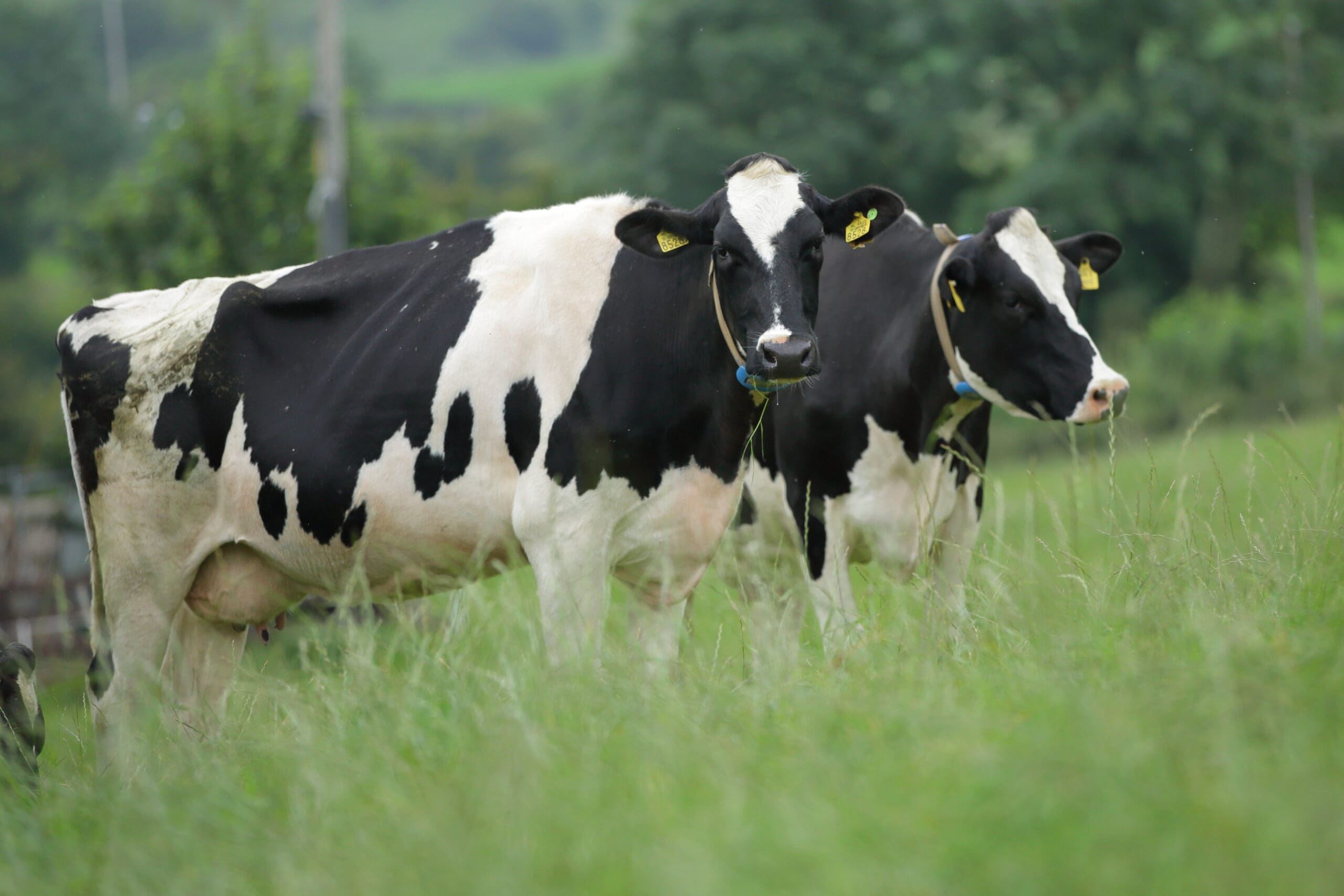

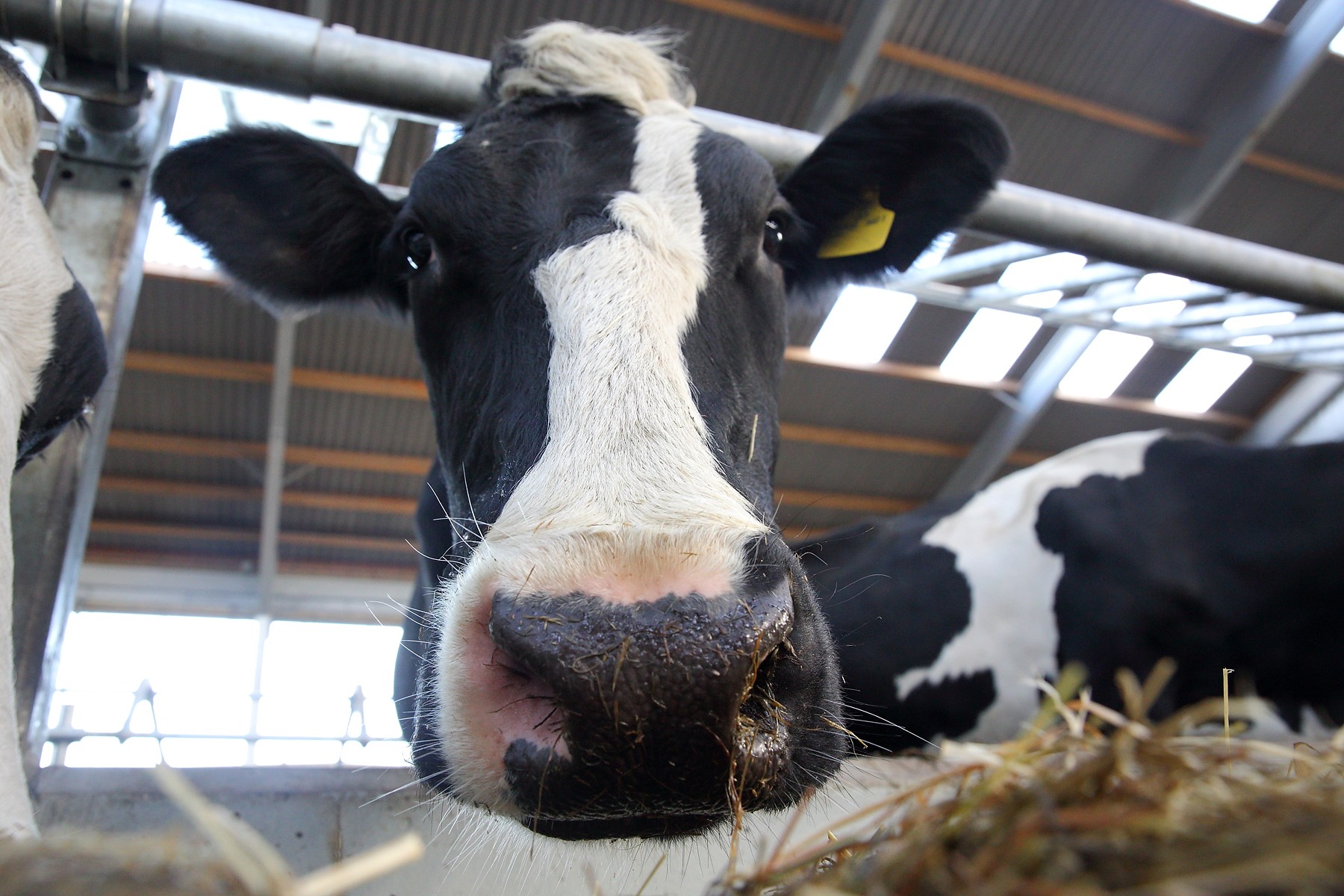
Ulster Farmers’ Union – dairy cows at Greenmout Agricultural College. Picture: Cliff Donaldson
As the dairy industry moves towards 2026, farmers are facing a squeeze as increasing milk volumes collide with falling prices. Global oversupply and record growth have pushed farmgate prices to levels well below the cost of production. With January milk cheques expected to fall to 28ppl or less, the sector is entering into a period of severe financial strain.
As we edge closer to 2026, the impending spring flush and the reality that milk volumes will continue to build into the early months of 2026, means the short term outlook for dairying is bleak. Producers point to global oversupply as the key driver behind the latest price crash. In 2025, global milk volumes are forecast to increase by 2%, with all major milk producing regions firmly in growth mode. Recent reports show the EU and UK have recorded their strongest milk production growth since 2017. This, combined with continued volume expansion across the US and New Zealand, is set to prolong a period of weaker commodity prices as the industry moves into 2026 with ample milk supplies.
UK milk production has surged in recent weeks, averaging 43.8 million litres per day over the past fortnight, 5.1% higher than the same period last year. In Northern Ireland, volumes have averaged 7.46 million litres per day, up 6.2% on the same period last year and 14% above the long term average, adding further pressure to an already saturated market.
Farmgate prices have fallen sharply as a result. Current UK milk prices are expected to decline by around 25% between October and January, a drop that is on track to surpass the scale of the 2023 crash, when prices fell by an average of 30% over a six month period. For many producers, the worst is yet to come. January milk cheques are expected to return prices of 28ppl or less, against a quoted cost of production approaching 40ppl. The implications of which will be significant. Following month on month price reductions across all processors, and with many already signalling that prices will fall back further, there is growing concern amongst many farmers.
Despite the bleak outlook, there are some reasons for cautious optimism. Following engagement with processors at the Royal Winter Fair, they are still broadly positive, citing steady demand across key markets. Crucially, Northern Ireland retains the processing ability to handle increased milk volumes, a position not shared across all parts of the UK. The only thing worse than a falling market is a falling market and goods stockpiling.
However, the industry’s ability to react quickly to oversupply remains limited. While supply responses are traditionally slow, stronger cull cow prices have enabled some farmers to act more decisively. Cows are being sold at pace, and producers who had been contemplating exit are now doing so to avoid prolonging financial losses. While these measures may only marginally ease oversupply in the short term, they reflect the severity of the pressure on the sector.
Dairy farmers are under intense pressure as rising milk volumes and global oversupply drive prices well below the cost of production. However, with demand holding firm, strong processing capacity in Northern Ireland, the sector remains resilient and well placed to recover when markets stabilise.