
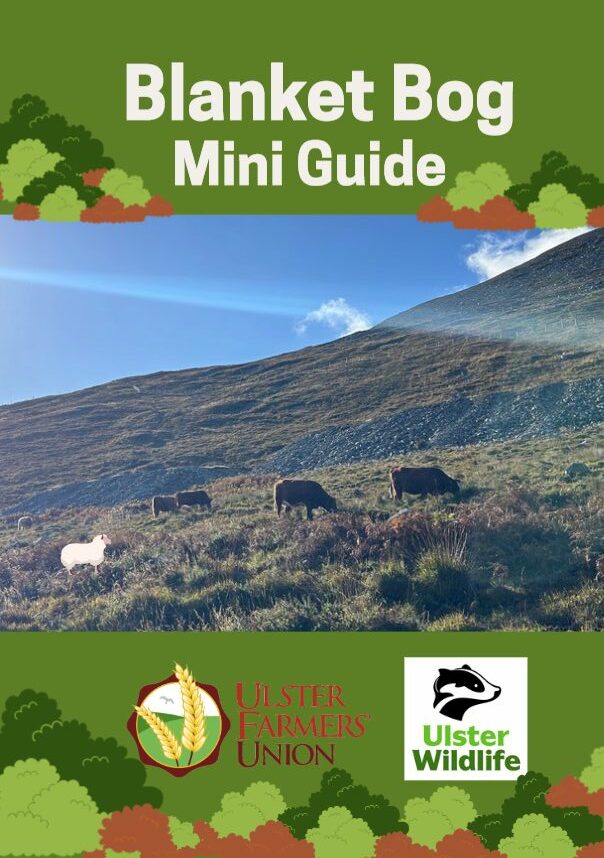
The new Blanket Bog Mini Guide, a free practical resource designed to help farmers and landowners identify key plant species and better understand the health and biodiversity of upland peatlands.
Farmers play a central role in managing upland farms, producing food while using knowledge and experience passed down through generations to care for these landscapes and deliver wider environmental and societal benefits including wildfire prevention, water quality, carbon storage and biodiversity.
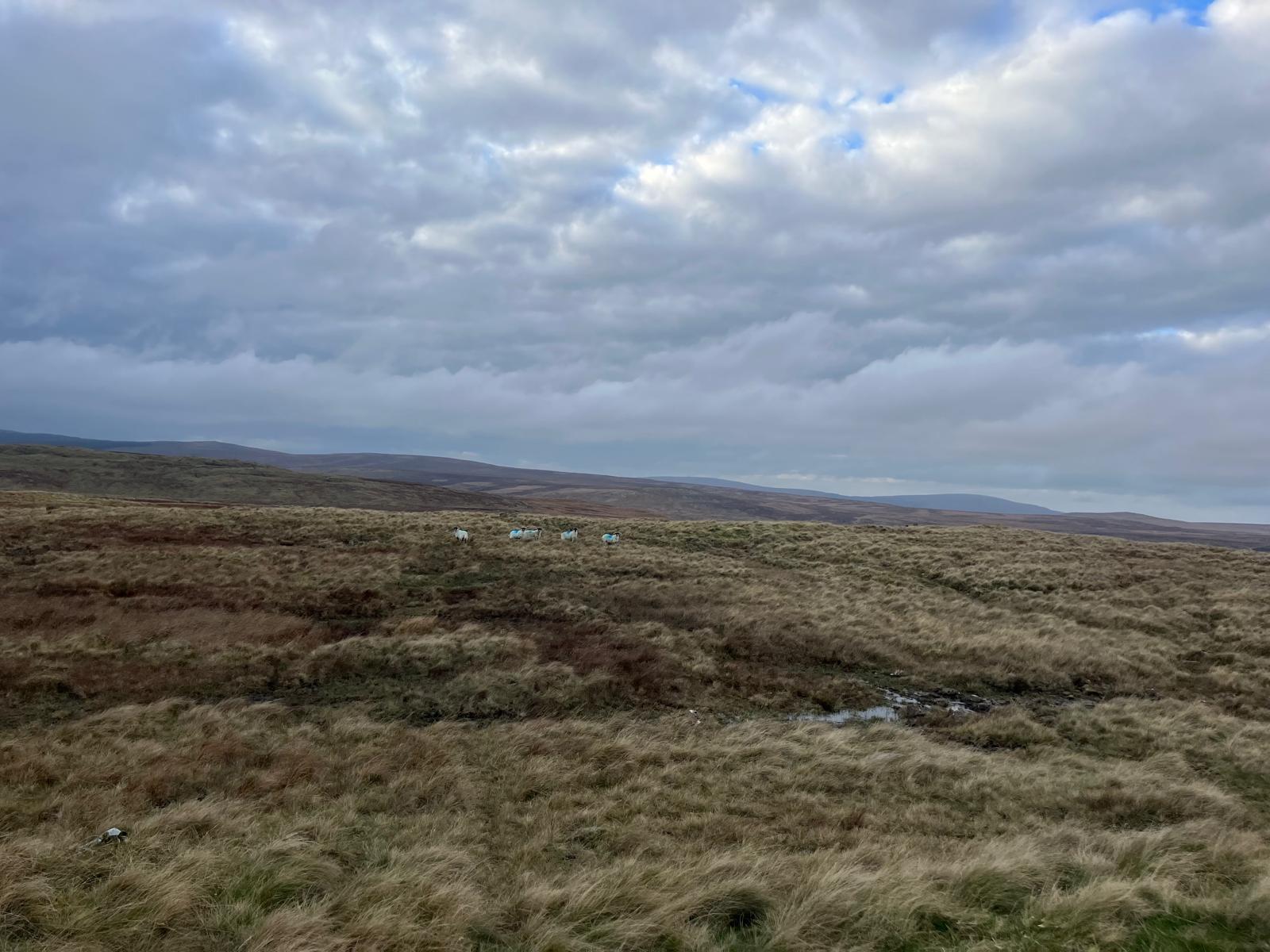
Many of these upland farms contain diverse, mosaiced blanket bog ecosystems, abundant with plant species that make the above benefits possible, with farmers grazing livestock while working with and managing the flora and fauna of the hill. Although such a unique landscape in global terms, Northern Ireland’s blanket bogs stretch across the Sperrin Mountains, the Mourne mountains, the Belfast Hills and Glens of Antim. Many upland sites are subject to environmental designations and condition assessments. Farmers have raised concerns that some classifications can appear overly simplistic or fail to reflect the full condition of a site, alongside a lack of clear, practical guidance on what they are expected to achieve.
Despite frustrations over unclear classifications, many farmers remain keen to continue to manage these sites positively, building on existing custodial knowledge not just for livestock but for wildlife and biodiversity too, however in the past there has been relatively limited easily accessible information provided to farmers. The “Blanket Bog Mini Guide” has been created for farmers and landowners to help highlight these positives by aiding not only in identification of plants but how certain species indicate blanket bog health, and often there is much more positives within diversity of plant species on farms than initially indicated in previous classifications.
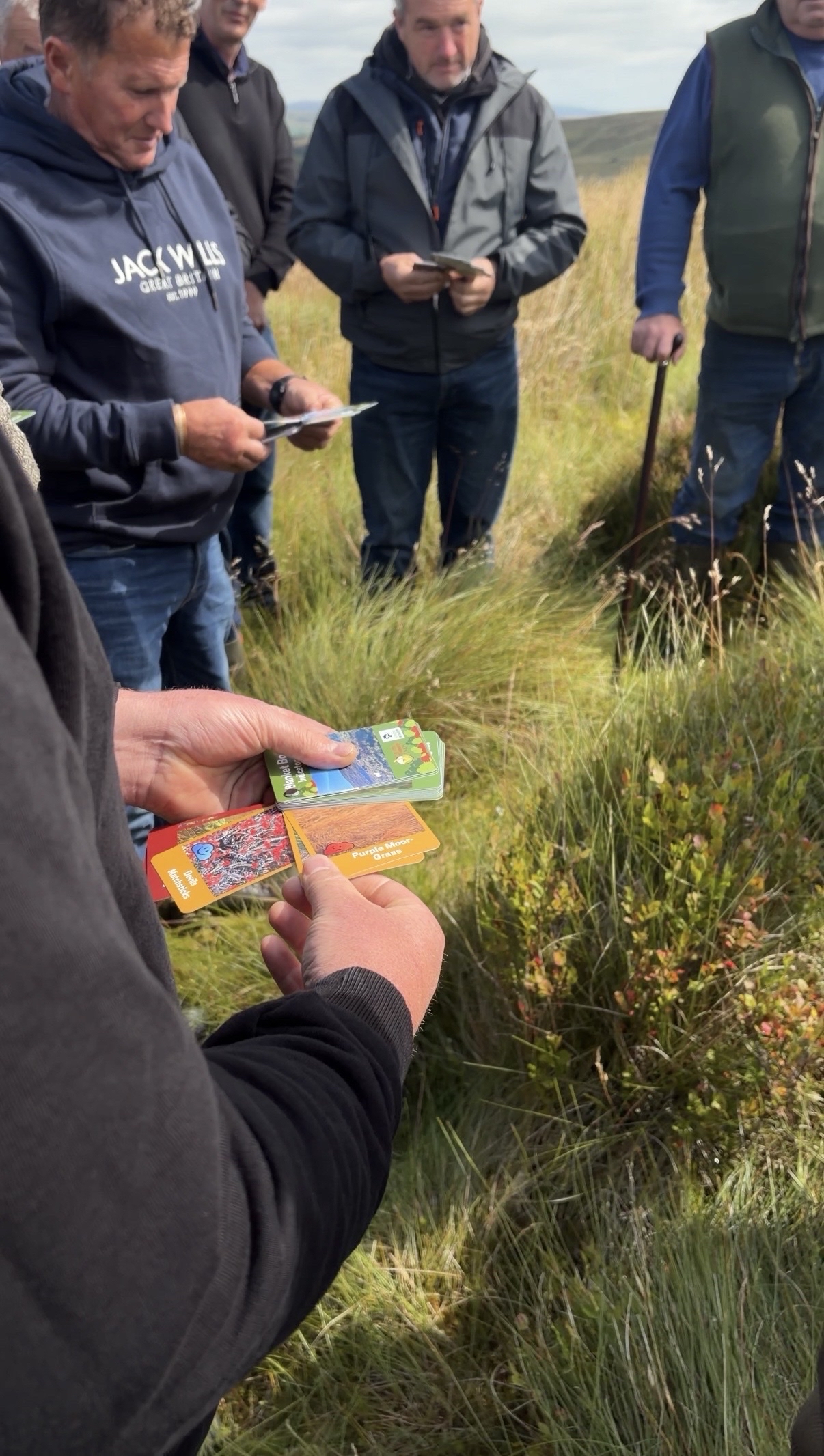
The Mini Guide is a pocket sized booklet, which follows a traffic light system, with each page or plant species being green, yellow or red. Green identifies more “positive” peatland species that indicate good health for a upland blanket bog, for example Round-leave Sundew or Sphagnum moss (which helps to form peat), red indicates a species that may have a negative impact on blanket bog, for example Sitka Spruce, and yellow sits somewhere in between; for example Purple Moor-Grass , commonly found on blanket bog, but where it becomes dominant it can reduce habitat diversity and contribute to a build-up of vegetation which may increase wildfire risk. The guide has pictures and short descriptions of each plant, when the plant is seen or produces a flower, and some additional information, including air quality indicators for some plants.
The “Blanket Bog Mini Guide” is a free resource for farmers and landowners in peatland areas, and if you are interested in getting your hands on a copy, please email info@ufuhq.com or see a digital copy on our website https://www.ufuni.org/education/education-resources/