
Six months on, rising costs underline importance of UK food security, says UFU
Six months on from the beginning of the fuel crisis, the Ulster Farmers’ Union (UFU) is warning that sustained inflation across key agricultural inputs is placing renewed pressure on farm business viability and exposing the vulnerability of domestic food production to geopolitical and energy market instability.
Latest UK agricultural price statistics show that, for example, fertiliser prices were at least 25.9% higher in June than a year earlier, and energy up 20%. At the same time, the price index for agricultural outputs was 4.3% lower year-on-year.
For the agricultural sector in Northern Ireland, sustained volatility in energy and agricultural input markets has serious implications for competitiveness, investment, and long-term productive capacity. As a region with a strong food-producing base, protecting that capacity must be recognised as a strategic priority, particularly when geopolitical instability continues to expose vulnerabilities in global supply chains.
The latest Northern Ireland agricultural income figures further demonstrate the scale of the cost base facing the industry. In 2025, expenditure on fertilisers and lime increased by 32% to £133 million, while total gross inputs across Northern Ireland agriculture reached £2.18 billion.
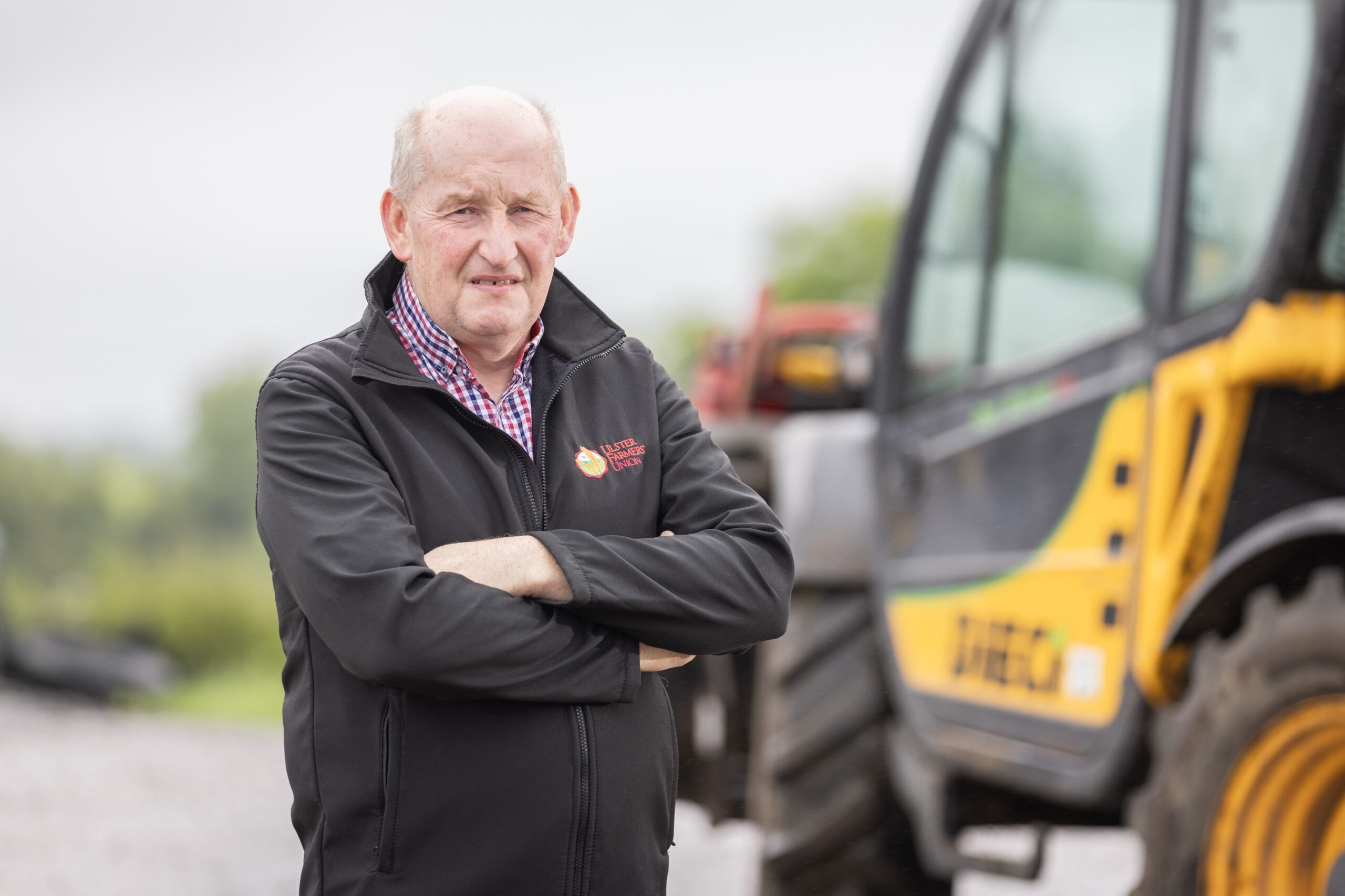
UFU Deputy President Glenn Cuddy said, “Six months on, the impact of geopolitical instability continues to be reflected in the costs facing our farm businesses. Fuel, fertiliser and energy are fundamental agricultural inputs and sustained increases are having a direct impact on margins, investment decisions and ultimately the capacity of farms to maintain viable production. At the very least, we need the Government to extend their welcome rebated fuel duty cut at 6.48p per litre beyond December 2026 to avoid a damaging 72% increase.”
“But what we need above all else is a two-pronged approach from the Government and the public. The Government must begin to take domestic food security seriously with a real framework as part of national security and contingency planning. And a greater understanding and appreciation from the public as to the pressures our farmers are under whilst keeping the shelves full. Sticking plaster politics will soon become ineffective and we need strategic and joined up thinking from all administrations.
“What is particularly concerning is the disconnect between rising production costs and the return available. Farmers cannot be expected to continually absorb additional costs while simultaneously being asked to invest, improve productivity, meet environmental commitments, and maintain a secure supply of high-quality food. There must be a sustainable return for agricultural produce which properly reflects the cost and risk involved in its production.”
The UFU says the experience of the past six months should reinforce the need for food production to be considered as part of the UK’s wider approach to economic and national security.
Mr Cuddy continued, “Food security is national security. That cannot simply be a phrase used during periods of international instability, it must be reflected in policy and in the way government values our sector.
“Northern Ireland agriculture is a strategic national asset. We have an established production base, skilled farmers, a significant agri-food sector and the capacity to make an important contribution to UK national security. Maintaining that capacity requires farm businesses to be economically sustainable.
“Government policy must recognise that resilience begins with the primary producer. If farm businesses do not have the confidence or financial capacity to invest and maintain production, the consequences extend far beyond the farm.”
Mr Cuddy concluded, “Farmers are accustomed to managing volatility, but resilience cannot be interpreted as an unlimited capacity to absorb cost increases.
“The past six months should be a clear reminder of why maintaining domestic food production matters. A resilient food system requires a viable primary production sector, fair and functioning supply chains and government policy that recognises food production as a long-term strategic priority.
“Protecting food security means protecting the productive capacity that underpins it, and that starts with ensuring farmers can secure a sustainable return for what they produce.”
Related Stories

Landowner retains ‘ultimate authority’ in new hunting agreement

Geothermal licensing consultation – potential opportunity, but major questions remain