
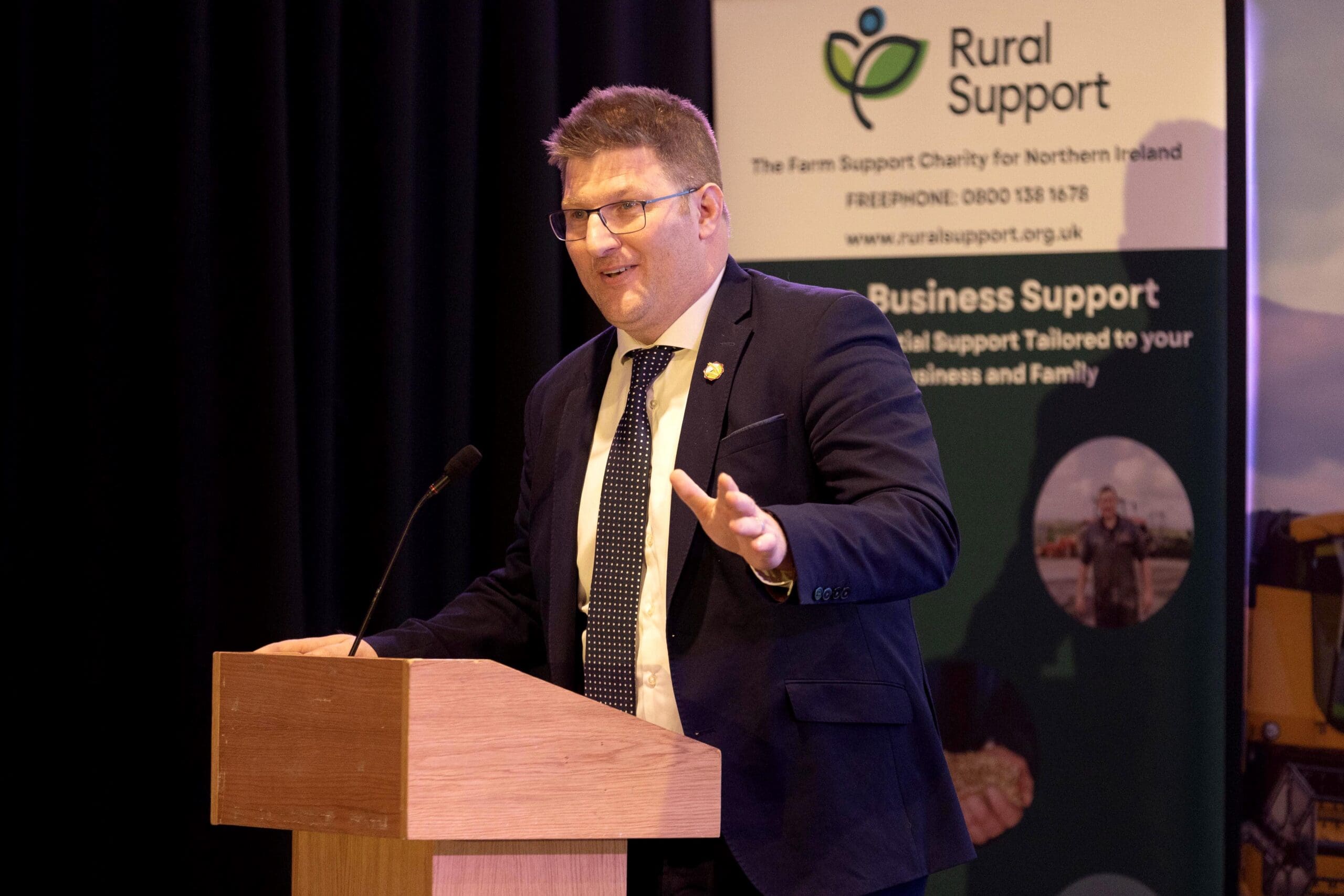
James McCluggage, UFU Policy & Communications Director, explains how policy is developed, why change can take time and how the UFU works to ensure farmers’ voices are heard.
By policy and communications director, James McCluggage
The word “policy” is one that gets used regularly in farming, government and the media. We hear about agricultural policy, environmental policy, trade policy and food policy. Yet despite hearing the term so often, many people are unclear about what policy is and how it affects their daily lives and businesses.
At its simplest, policy is a plan. It is how governments decide to deal with a particular issue or challenge. Whether it is tackling water quality, designing farm support schemes, regulating animal health or setting trade standards, policy provides the framework that guides decisions.
For farmers, policy matters because it influences almost every aspect of the industry. The support payments available to businesses, environmental regulations, planning rules, disease control measures and trade arrangements are all shaped by policy decisions.
One of the most common misconceptions is that policy can be changed overnight. It is understandable why people might think this. When an issue is causing concern on farm, it can feel like the solution should be straightforward. However, the reality is that government policy is rarely changed by a single meeting, a single letter or even a single organisation.
Good policy should be based on evidence. Governments are expected to consider economic impacts, environmental outcomes, legal obligations and the views of affected stakeholders before making decisions. This often means that change takes time.
The process usually involves research, consultation, engagement with industry representatives, discussions with government officials and, in many cases, political consideration by ministers and elected representatives. It is not always fast, and it is not always perfect, but there are good reasons why major decisions are scrutinised before they are implemented.
This is where organisations such as the Ulster Farmers’ Union (UFU) play an important role. The UFU exists to ensure that the voice of Northern Ireland’s farming families is heard wherever decisions affecting agriculture are being made. That means working with members, gathering evidence, engaging with policymakers and putting forward practical, evidence-based solutions. Sometimes that involves supporting government proposals where they make sense. At other times it means challenging policies that we believe will have negative consequences for farm businesses and rural communities. More often than not, it involves a combination of both.
There is also a common perception that lobbying is simply about demanding change. In reality, effective lobbying is about much more than that. It is about building a credible case, presenting evidence, understanding how decisions are made and engaging constructively with those responsible for making them.
The organisations that often achieve the most are not necessarily the loudest. They are usually those that are respected, trusted and listened to because they bring forward practical solutions and well-evidenced arguments. For more than 100 years, the UFU has worked with governments of different political parties, ministers of different viewpoints and officials across a wide range of departments. While personalities and political priorities may change, the Union’s role remains the same: representing the interests of our members and ensuring that farming has a strong voice in decision-making.
The reality is that policy development is often a marathon rather than a sprint. Some issues take months to resolve. Others can take years. Progress is not always visible, and success is not always reflected in headlines. Sometimes success means securing a major policy change. Sometimes it means preventing a bad proposal from becoming worse.
Over the coming months, I will use this blog series to take readers inside the policy process. We will look at how the UFU develops policy positions, how lobbying works in practice, why consultations matter, how political systems operate and what happens behind the scenes when members raise concerns with the Union. My hope is that these articles will help demystify a process that can often appear complex from the outside and provide a better understanding of how the UFU works to ensure that the interests of Northern Ireland agriculture continue to be represented at every level of government.
Next in the series: What happens when a UFU member raises an issue? From the first phone call or email to engagement with government, we’ll follow the journey of how members’ concerns become Union policy and lobbying priorities.
Related Stories
Six months on, rising costs underline importance of UK food security, says UFU
Strategic importance of the UK’s uplands must be recognised, say UK farming unions