
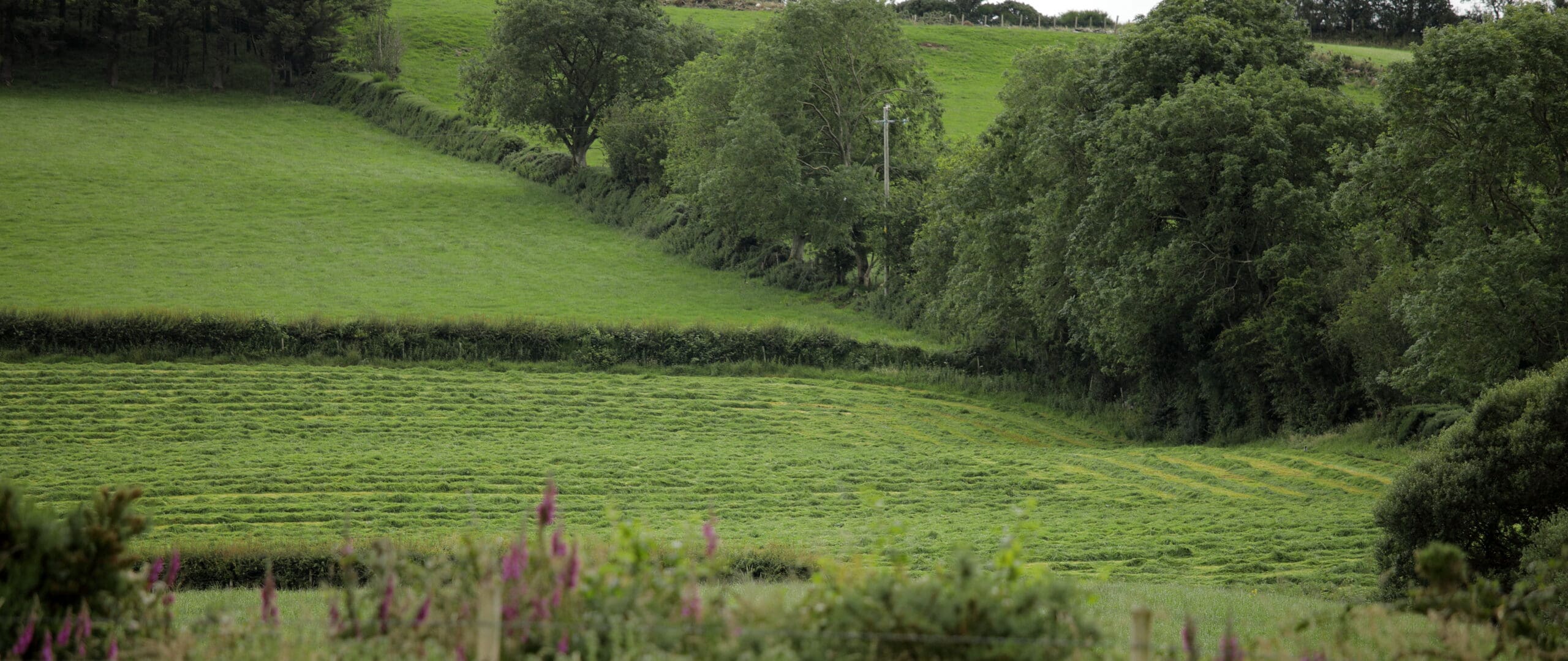
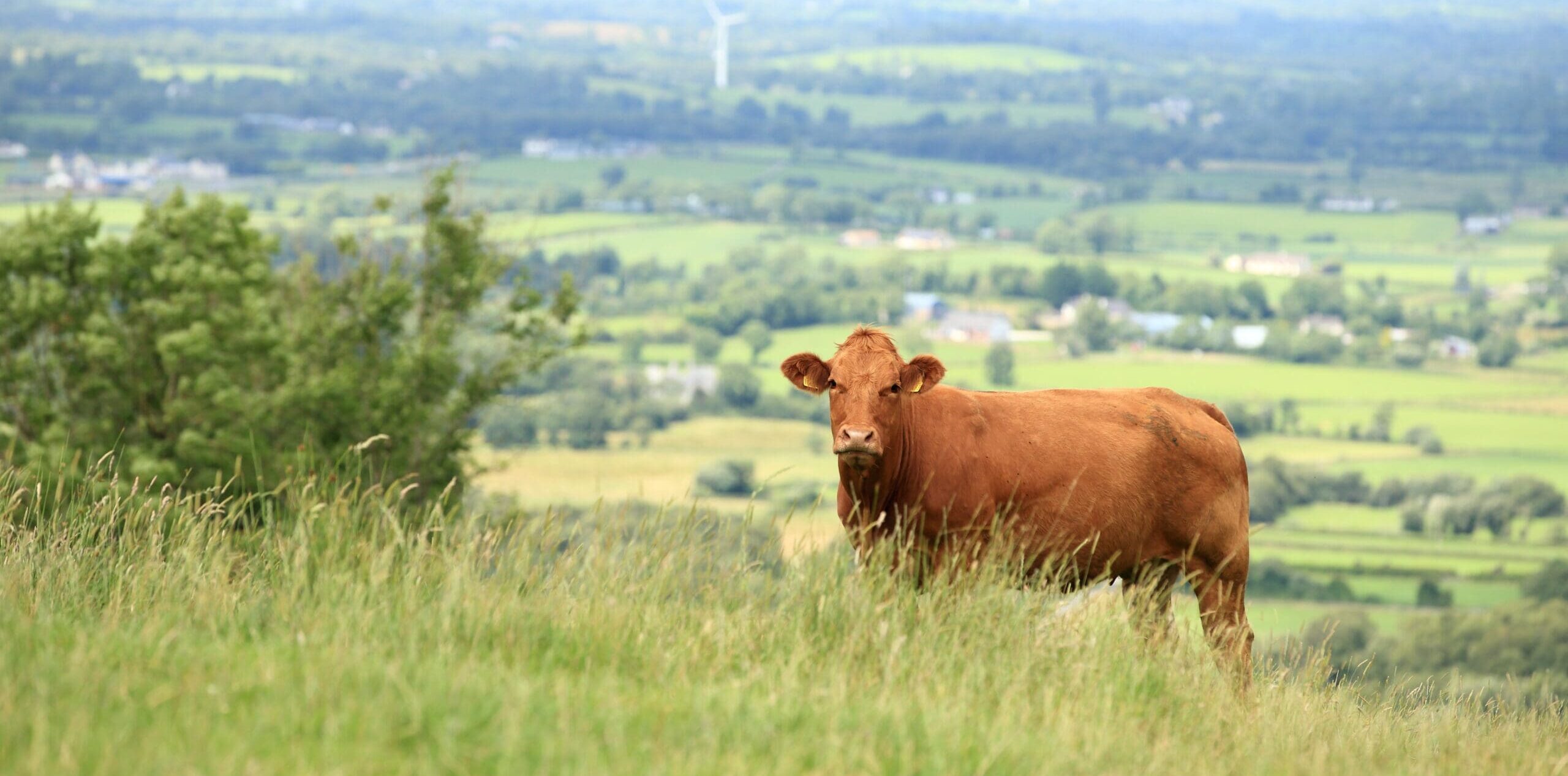
Tyrone countryside. Picture: Cliff Donaldson
Commodity Watch, written by UFU policy officer Kayleigh Ashton-Meek
Over the past couple of years, PhD students from Queen’s University Belfast have been working on two projects focussing on the population of badgers in Northern Ireland and different technologies for assessing population density and behaviour. The projects build on original work carried out by Professor Neil Reid in 2007/2008 using sett surveys to determine estimated badger population in NI, which is commonly cited when discussing NI badger numbers.
The first project, being carried out by student Emily Currie, is assessing how useful thermal imaging technology could be for wildlife surveys, with a particular focus on badgers. Researchers are comparing traditional daytime survey methods, such as walking hedgerows and field boundaries to look for badger setts and signs, with newer thermal imaging methods using handheld thermal binoculars and thermal drones. The thermal binoculars allow researchers to quietly observe fields from a distance without disturbing wildlife, recording the number of badgers and other animals seen during regular 360-degree scans. Thermal drones are then used to survey larger areas of farmland, flying in a simple lawnmower-style pattern across 1 km² sites to detect badgers and other wildlife more quickly and efficiently. The study aims to find out whether thermal technology can provide a more accurate and less disruptive way of monitoring badgers and other species in the countryside.
The second project, being carried out by student Clare Childs, aims to estimate the population size and distribution of the Eurasian badger across Northern Ireland while testing the use of thermal drone technology as a new tool for wildlife surveying. Researchers will survey approximately 50 different 1km² sites across all counties and land types using a thermal drone during spring and autumn 2026. Flights will take place between 8pm and 1am using a simple lawnmower-style flight pattern, with the drone normally operated at 50m altitude and lowered to 30m where needed to safely confirm badger sightings. Surveys will be carried out by a two-person team consisting of a licensed drone pilot and an observer/note taker, with launches taking place from public locations and care taken to avoid disturbing farmyards and livestock, particularly horses and young animals. As well as recording badger numbers and locations, the team will also note sightings and behaviours of other wildlife species such as foxes, rabbits, deer, birds, cats, and dogs. Where badgers are identified, follow-up daytime visits will be carried out with the landowner’s permission to look for badger faeces, which will be tested at Queen’s University Belfast for bovine tuberculosis and Johne’s disease. Test results will then be shared directly with the landowner.
Ulster Farmers’ Union are supporting these projects by promoting the work being carried out and inviting farmers to participate. There are two ways that you can be involved in the project: Drone Survey Participation, and Sample Collection. The more farmers participating in the projects, the higher quality results can be collected. The aim is that these findings can be used to help aid in policy development in the future, as well as setting a baseline for further studies on badgers and other wildlife.
The UFU also wants to raise awareness of these drone flights – the students will be out on the ground approximately between 8pm and 1am and will have QUB branded identification with them. The researchers will aim to only fly over farmland and not fly over yards. Permission will be gained from farmers before any walk around or faecal sampling on land. If there are any concerns, please get in touch with UFU or QUB for more information.
Farmers can register their interest via the online form: https://www.surveymonkey.com/r/YZP52HP
Related Stories
UFU urge members to attend bTB webinar
UFU urge livestock producers to prepare for lungworm vaccine withdrawal