
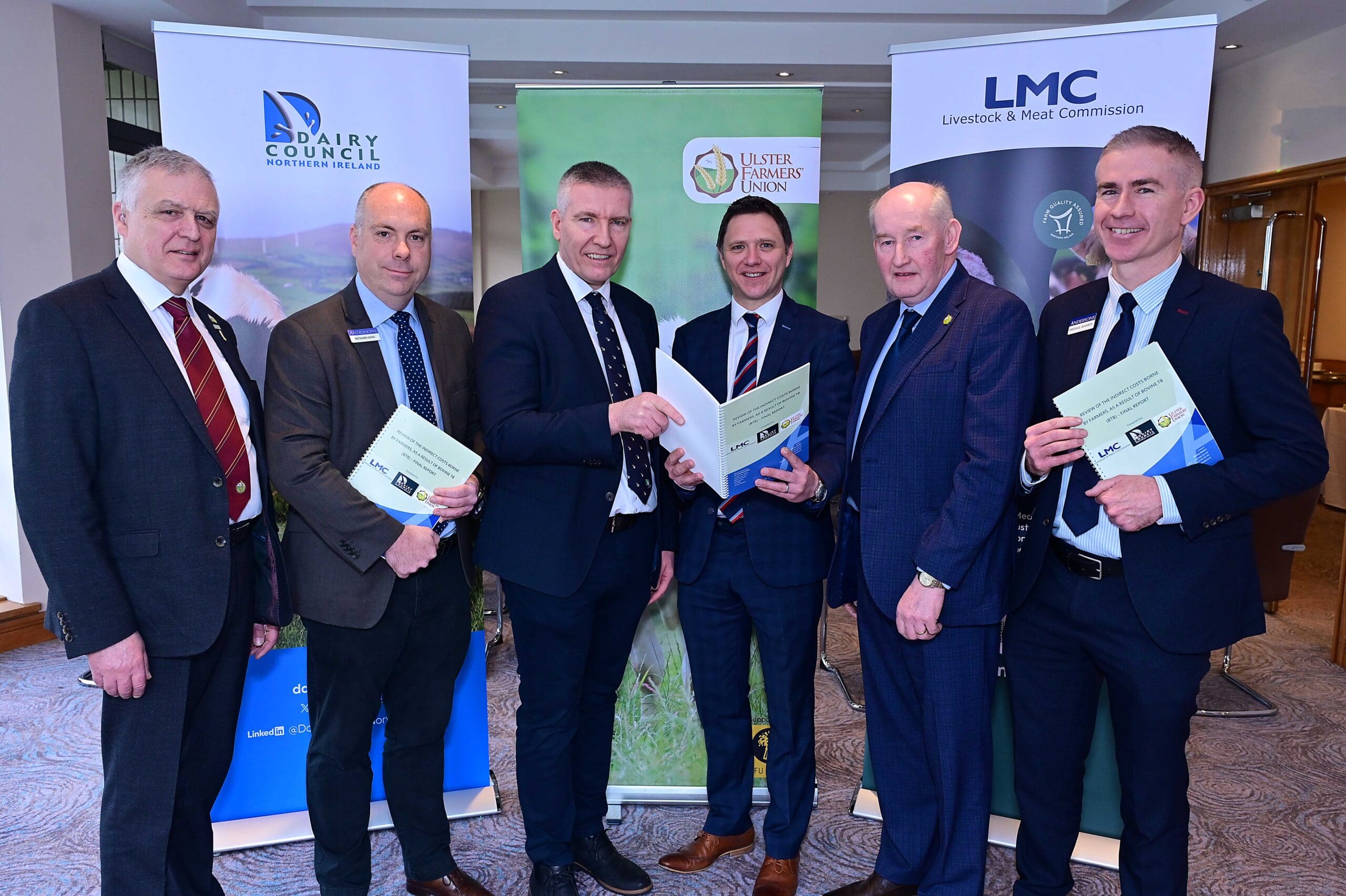
The Ulster Farmers’ Union (UFU), together with the Livestock and Meat Commission (LMC) and the NI Dairy Council, today launched a landmark independent study into the indirect costs of bovine Tuberculosis (bTB) at the Stormont Hotel.
Stakeholders from across Northern Ireland and ROI agricultural industry, alongside representatives from DAERA as the Andersons Centre presented its findings.
UFU deputy president, Glenn Cuddy, said, “This quantifies, for the very first time, the scale and composition of the indirect costs of bTB borne by NI farmers. It draws on stakeholder interviews, a large-scale farmer survey, farm-level and aggregated modelling to provide a robust assessment of how bTB affects farm businesses in practice and we must thank farmers and stakeholders for their participation in this vital evidence gathering process.”
According to the study, indirect bTB costs borne by farmers are estimated at just over £96 million per year, equivalent to almost one-third of total agricultural support in Northern Ireland.
“This analysis highlights that bovine TB is not only a persistent animal health issue, but a significant economic one, representing a major and persistent drag on farm profitability. When combined with DAERA’s direct expenditure on testing, compensation and programme delivery, the total annual economic cost of bTB on NI agriculture is approximately £156 million and the greatest financial impact falls on farmers, with indirect costs far surpassing direct support.”
Colin Smith, LMC Chief Executive, welcomed the opportunity to work collaboratively with the UFU and DCNI to commission this independent, robust report.
He said, “The report shows almost £50million (51.4%), of the total cost is carried by herds that have had no breakdown. This stark statistic highlights these costs will persist in the long term unless decisive action is taken to eradicate bTB.
“In addition to this, the report also highlights the environmental and social costs of bTB which cannot be underestimated.
“LMC remains committed to working in partnership with stakeholders to drive forward the bTB eradication programme. Together we can deliver meaningful progress.”
Dairy Council for Northern Ireland Chief Executive, Ian Stevenson, welcomed publication of the report.
Commenting, Ian Stevenson, said, “This independent review comprehensively analyses and quantifies the indirect costs borne by farmers in Northern Ireland as a consequence of Bovine TB. For too long our farmers have endured the practical, financial, environmental and mental anguish that comes with trying to tackle Bovine TB in the cattle population in Northern Ireland.
“The excellent case studies really give a sense of what farming families have to deal with when the scourge of bTB makes an unwelcome visit. Through this insightful review, which was jointly commissioned by DCNI, LMC and UFU we have brought meaningful evidence to the annual cost of this disease on industry, and I am hopeful that the findings will give added momentum to the push for eradication of this disease in Northern Ireland.”
Key cost drivers include production losses, additional labour, cashflow constraints, biosecurity expenditure and environmental inefficiencies, with over half of these indirect costs arising even in the absence of a breakdown, reflecting the baseline burden of routine testing and disease risk.
UFU deputy president continued, “The findings confirm that bovine TB is not a short-term or episodic issue, but a major structural constraint on Northern Ireland’s livestock sector. Policy needs to be framed around reducing the total economic impact and not just managing stock valuation costs. Priority must also be given to measures that minimise the risk of a bTB breakdown,” added Mr Cuddy.
“There is no single solution to the bovine TB challenge. However, evidence shows that incidence can be significantly reduced through sustained, coordinated action across multiple fronts and dealing with wildlife is one of the examples. Farmers must also remain central to this process if meaningful and lasting progress is to be achieved.”
Related Stories
UFU warns NI farmers as bluetongue cases in GB soar

Preventing sheep scab: UFU guidance for responsible farm practices
