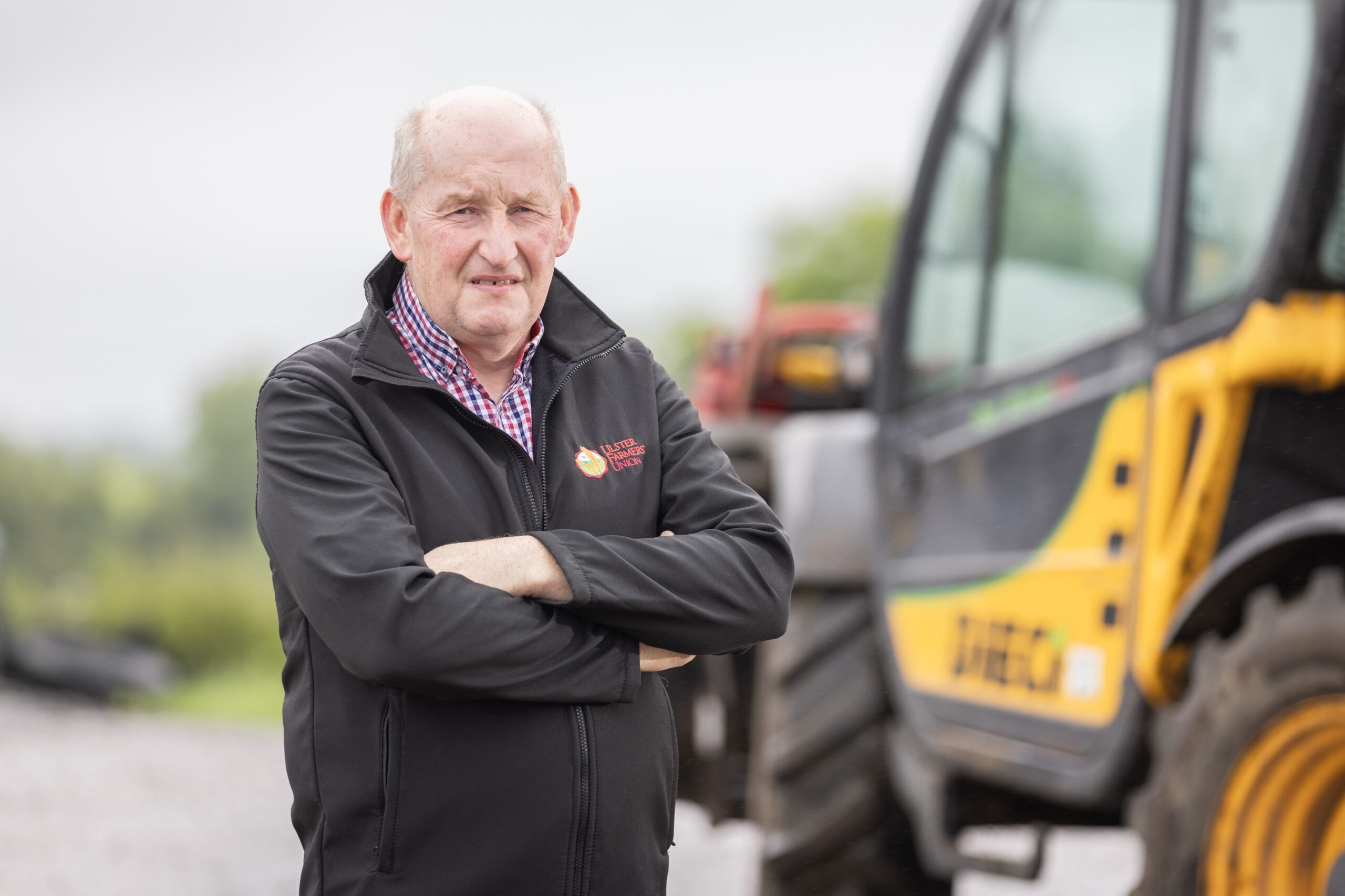

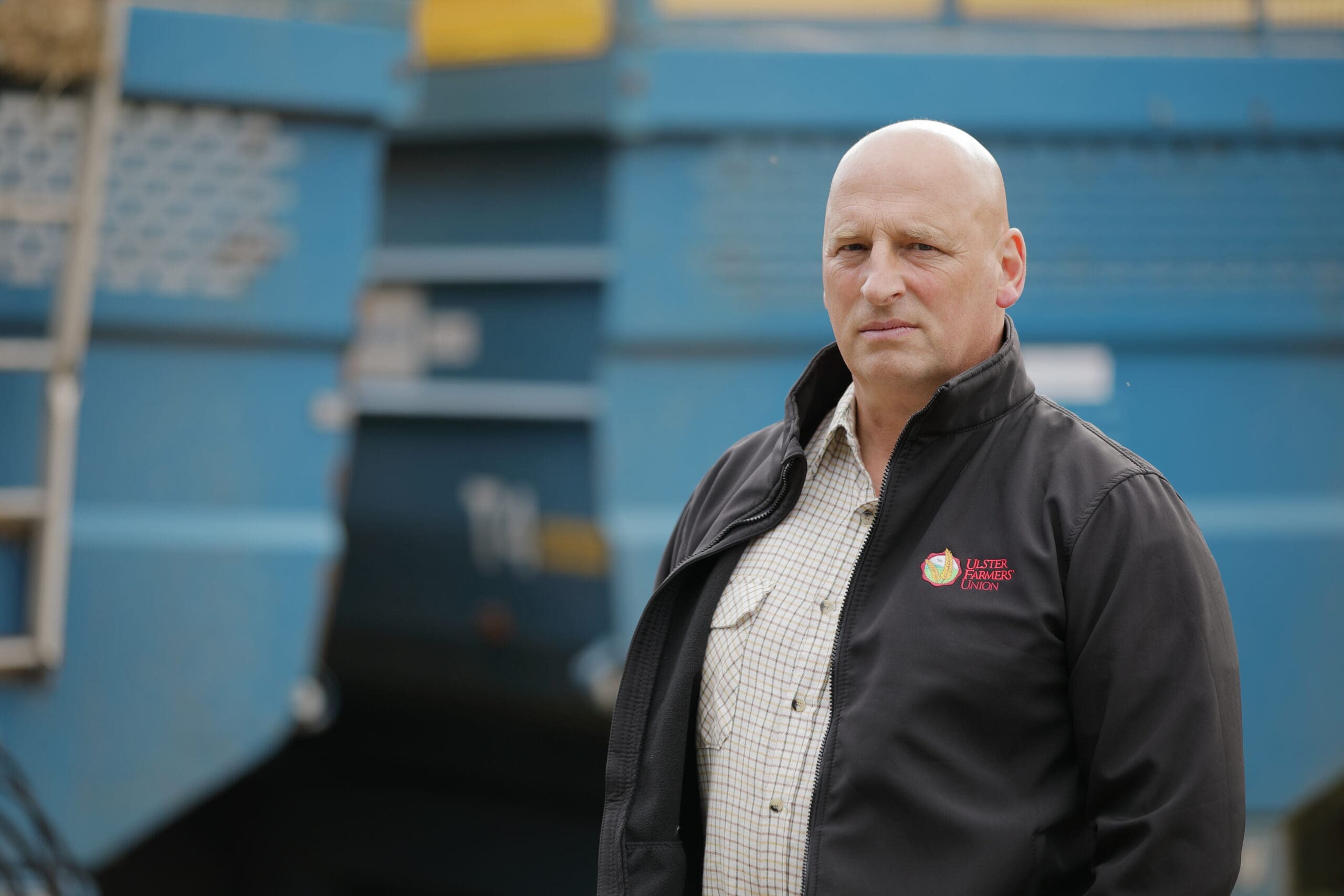
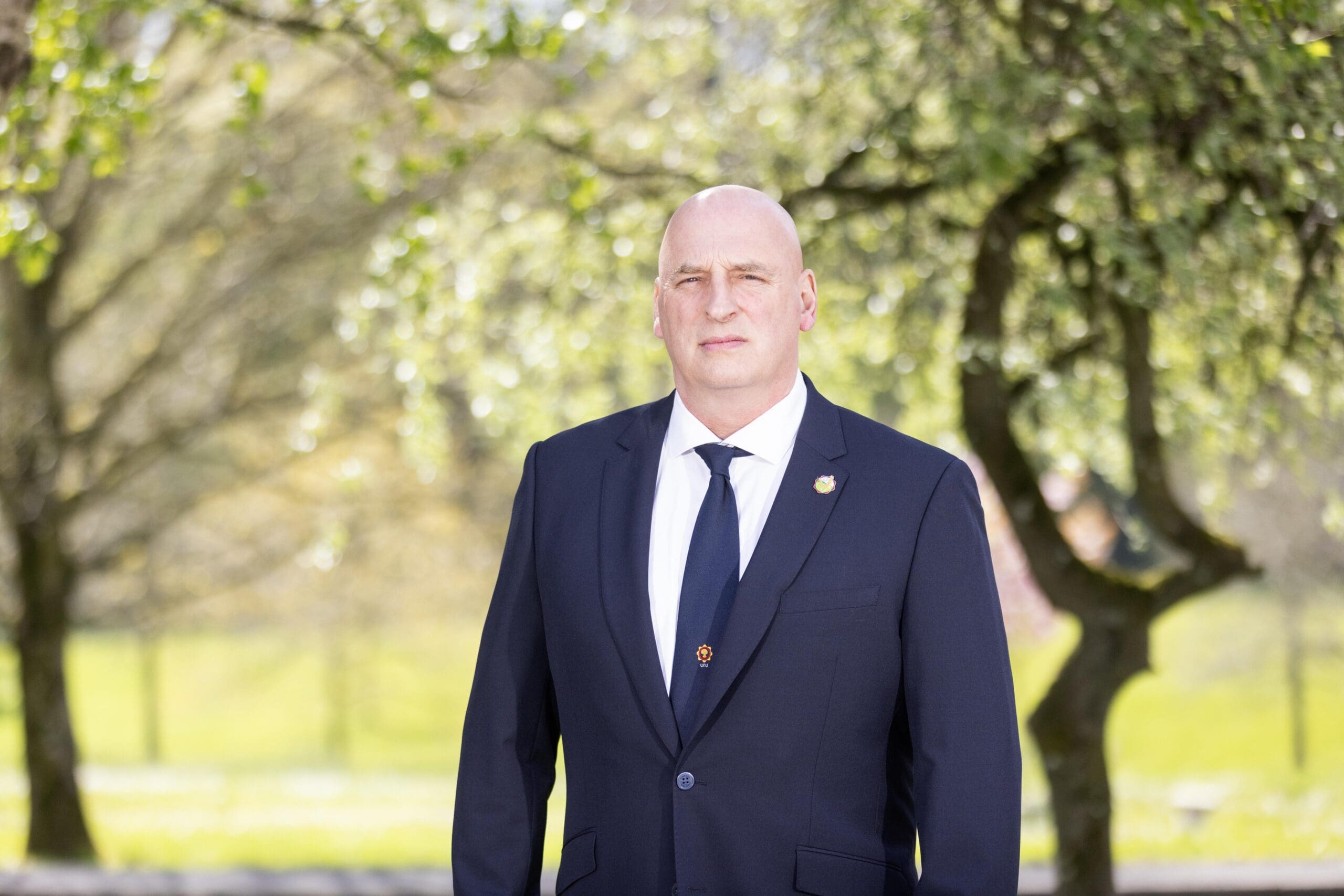
UFU Deputy President John McLenaghan, on his farm near Garvagh. Picture: Cliff Donaldson
The Ulster Farmers’ Union has responded to DAERA progress on draft regulations to establish a Just Transition Commission, stressing that any transition must be grounded in realism, fairness and what is genuinely achievable for farmers.
The UFU also welcomes confirmation that agriculture and rural representatives will sit on the Commission, recognising the importance of ensuring that those most directly affected by climate change policy can directly raise concerns about the unachievable targets imposed on the industry.
However, the UFU has stressed that the Commission must confront the hard reality facing farmers in Northern Ireland. Many of the climate change targets imposed on the agriculture sector are simply unachievable in their current form, are not grounded in practical on-farm evidence, and risk placing a disproportionate and unfair burden on local food producers.There is growing concern within the farming community that existing targets take insufficient account of food production, farm viability, and Northern Ireland’s unique agricultural profile. If left unchallenged, current policy risks exporting emissions rather than reducing them, while undermining domestic food security.
UFU Deputy President John McLenaghan said, “The UFU has long supported the establishment of a Just Transition Commission, but its success will depend on whether it is prepared to challenge assumptions and deal honestly with what is achievable on farms. Agriculture faces unique and unavoidable biological constraints, and climate targets that ignore these realities are neither fair nor credible.”
Mr McLenaghan added, “We are prepared to play our part on climate change, but it must be evidence-based, proportionate and achievable. The current legislative framework does not yet strike that balance. It is essential that the Commission recognises these shortcomings and works to ensure that farmers are not asked to shoulder an unreasonable share of the burden, while continuing to produce safe, affordable food.”
The UFU will continue to engage constructively to ensure that any transition is genuinely just, supports farm businesses, and safeguards the future of local food production.
Related Stories
Avian Influenza – Staying Vigilant
UFU reveals devastating emotional toll of inheritance tax changes on Northern Ireland’s farming families